by Kitty Leong | Jul 1, 2026 | CASS 的故事 - TW
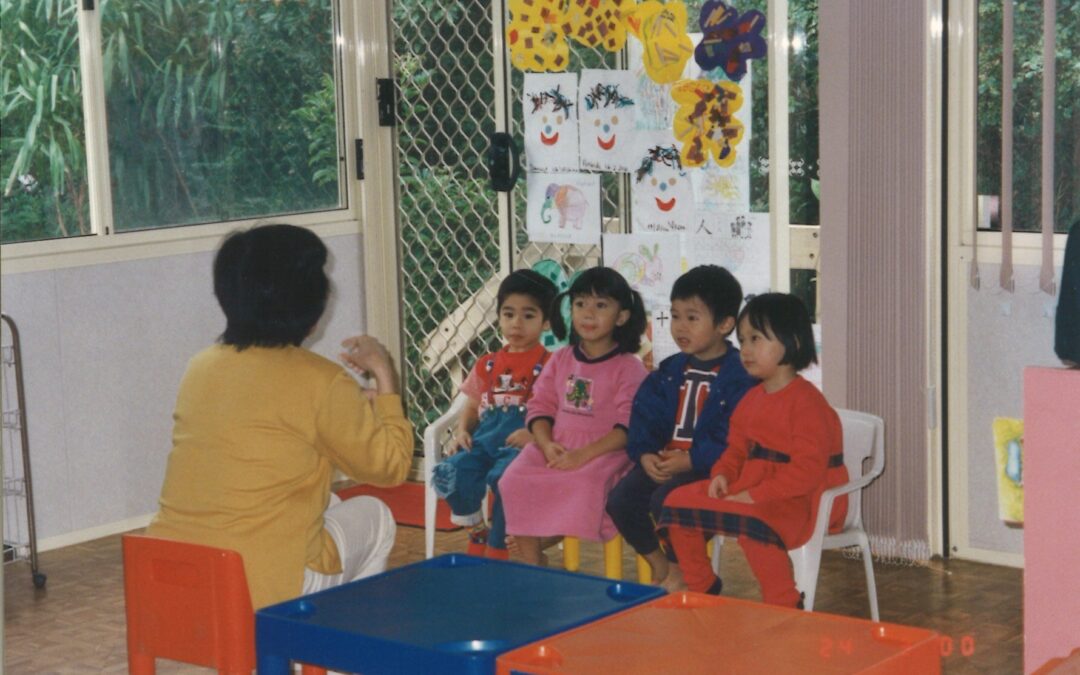
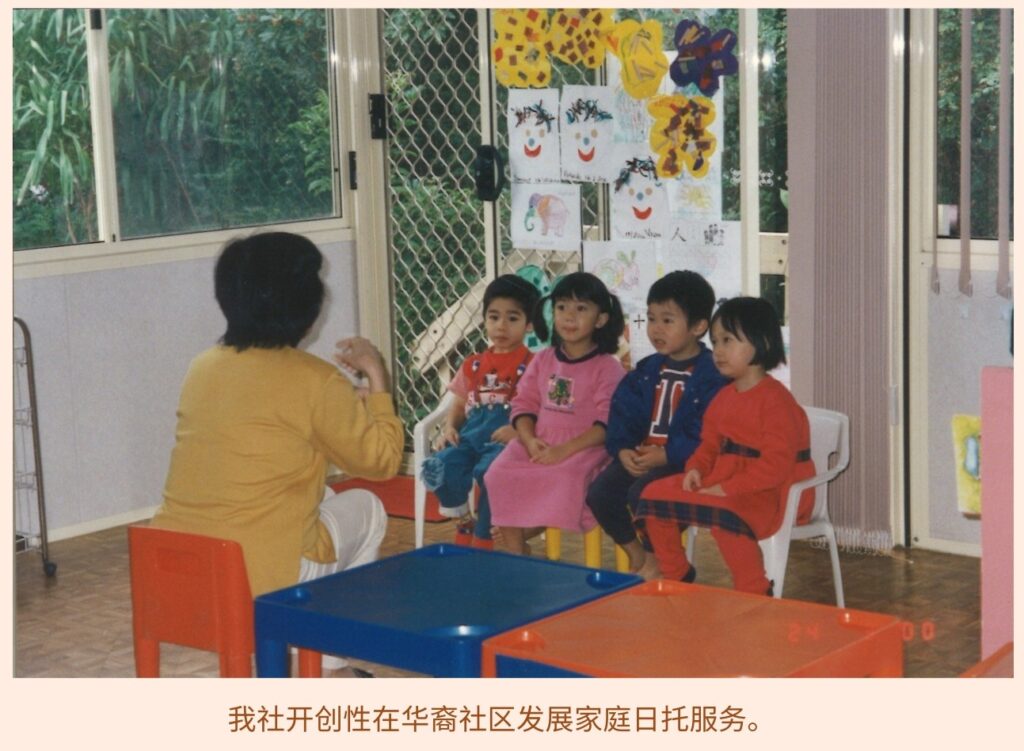
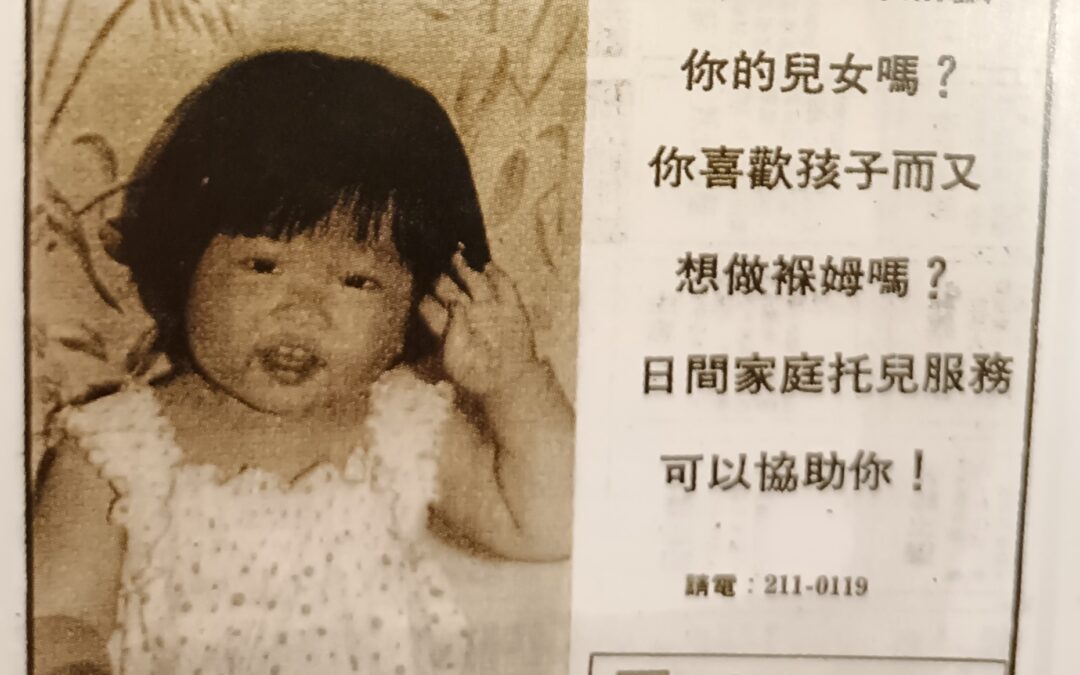
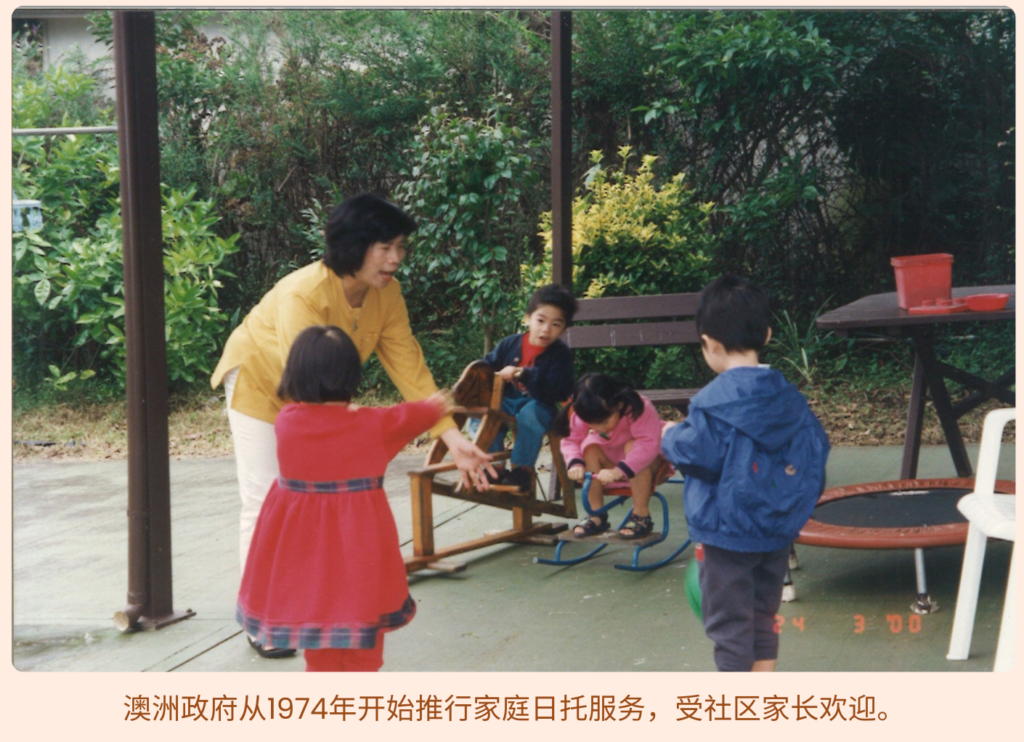
1983年,服務社先後獲得兩筆政府撥款,聘請了三名半職工作人員,正式在華裔社區開展 “家庭日托發展服務(Family Day Care Development Service,FDCDS)” 轉介服務項目,為尋找托兒服務的家長和想提供托兒服務的保姆牽線搭橋。
按照規定,所有保姆都必須在其地區主流家庭日托機構名下登記註冊。
面對來自四面八方的需求,服務社希望能盡量滿足社區人士,但當時的制度卻不允許跨地區提供服務。
對社這個試驗性項目,州政府同意了悉尼市的Sydney Family Day Care和服務社合作提供跨地區的支持,認可這種特殊的運作模式。
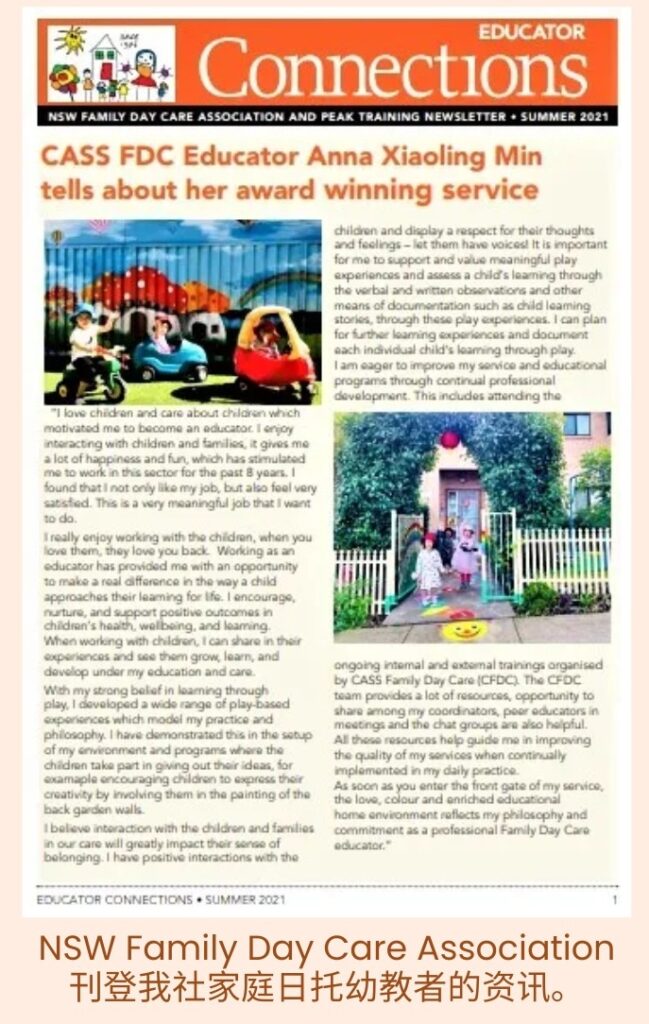
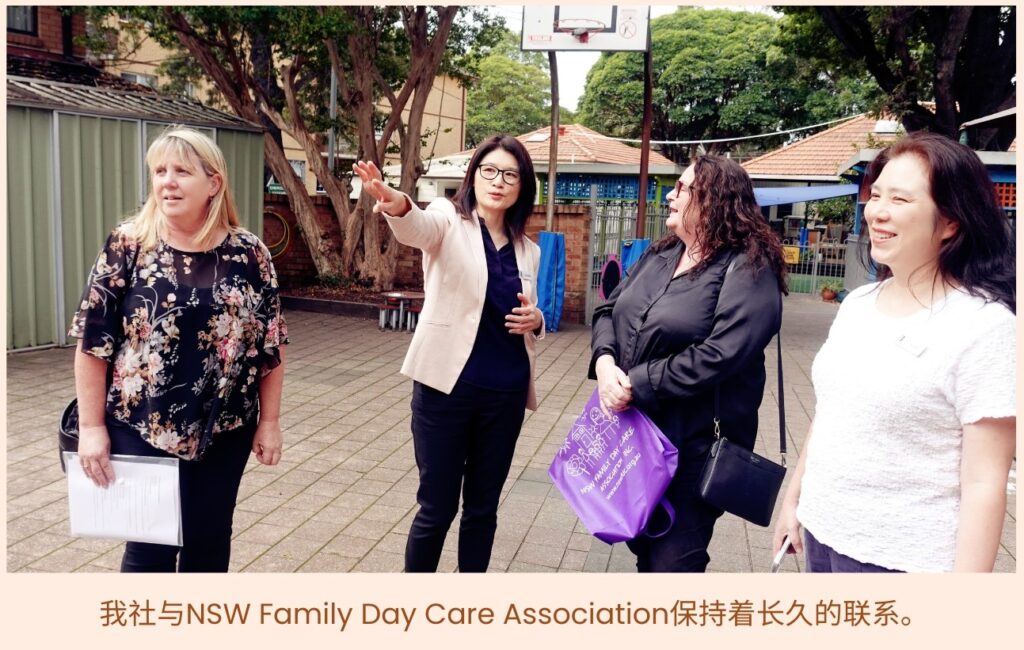
而董事局覺得:想要華裔保姆能長期為社區內的家庭提供跨區服務,就需要得到各地區的Family Day Care運營機構的支持,所以與悉尼市之外的家庭日托機構打交道,是很重要且有必要的。於是服務社申請加入新州日托行業機構NSW Family Day Care Association——一間地區日託運營機構需要參加的組織。和主流機構打交道推動項目,對服務社是十分關鍵的事情。
原本董事局以為,已交往的Maureen Hastings女士如此鼎力支持,其他的地區機構應該也會友善。誰知道,當參與首次會議時,服務社代表遇到的是質疑和盤問:“你們為什麼要做這個項目?” 、“為什麼要來搶我們的生意?” 、“讓家長和保姆直接找我們,不需要你們!”
社代表方秀玲、朱羅竹英等人,總是耐心解釋:“我們不是來‘搶生意’的,而是幫英語不好的華裔人士了解服務情況,畢竟語言和文化是障礙。”得到的回應開始時充滿敵意:“不會英文,就別來做保姆!” 場面一度十分尷尬。
但社代表沒有退縮,仍一次又一次出席會議,堅持溝通,“一回生二回熟”。時間久了,曾經冷漠或有敵意的機構,慢慢地了解並認可了服務社的用心,逐漸敵意消散,換成尊重和友誼。多年後,眾人不僅成為朋友,也成了長期合作的夥伴。
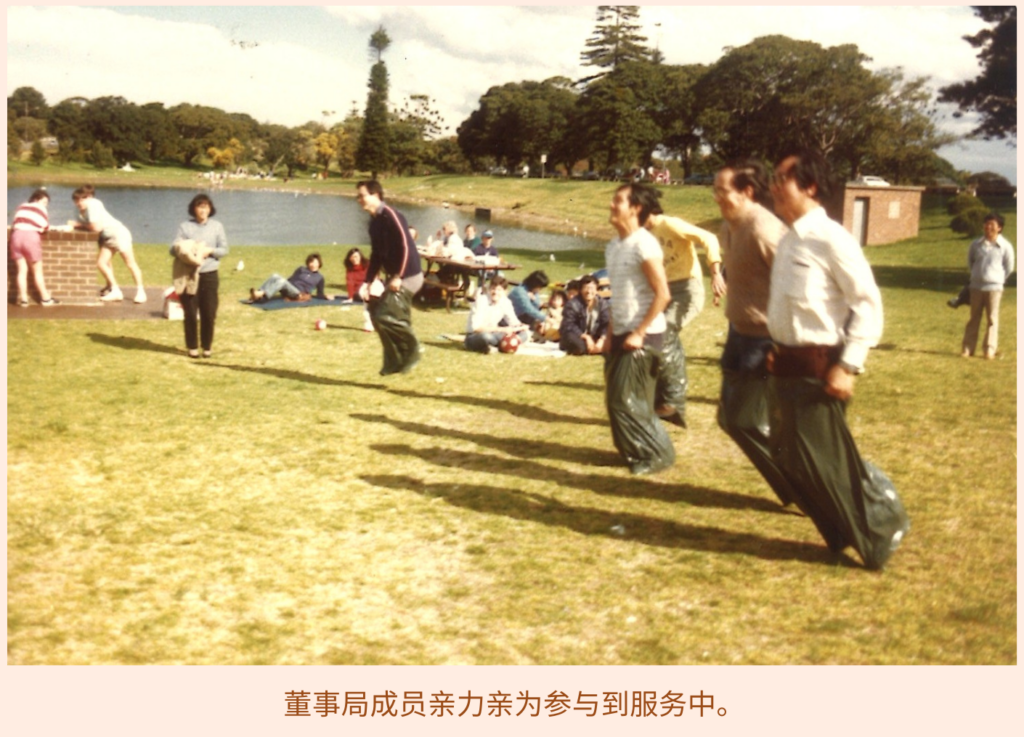
另一方面,州和聯邦政府的托兒服務部門,每隔兩個月就會與服務社開會溝通。剛開始時,大家較陌生,長期打交道下來,官員們發現服務社的團隊很不錯,有管理能力、有想法、敢幹實事。
這段歷程反映一個道理:遇到困難時,堅持把事做好,久而久之,陌生會變成熟悉,隔閡會變成信任。
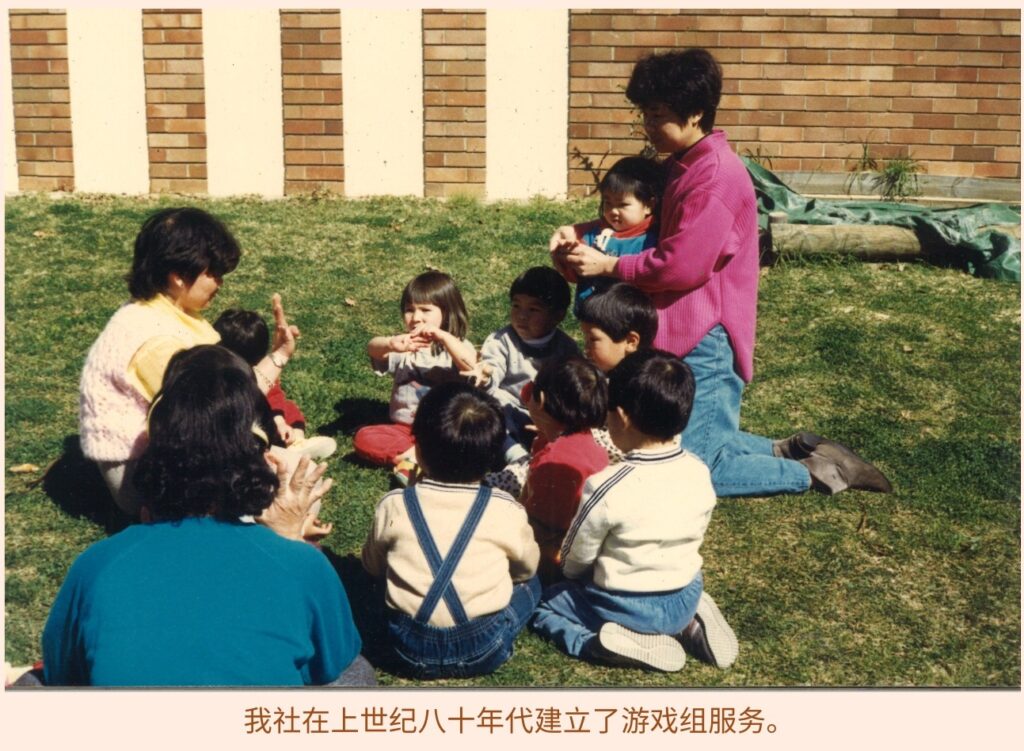
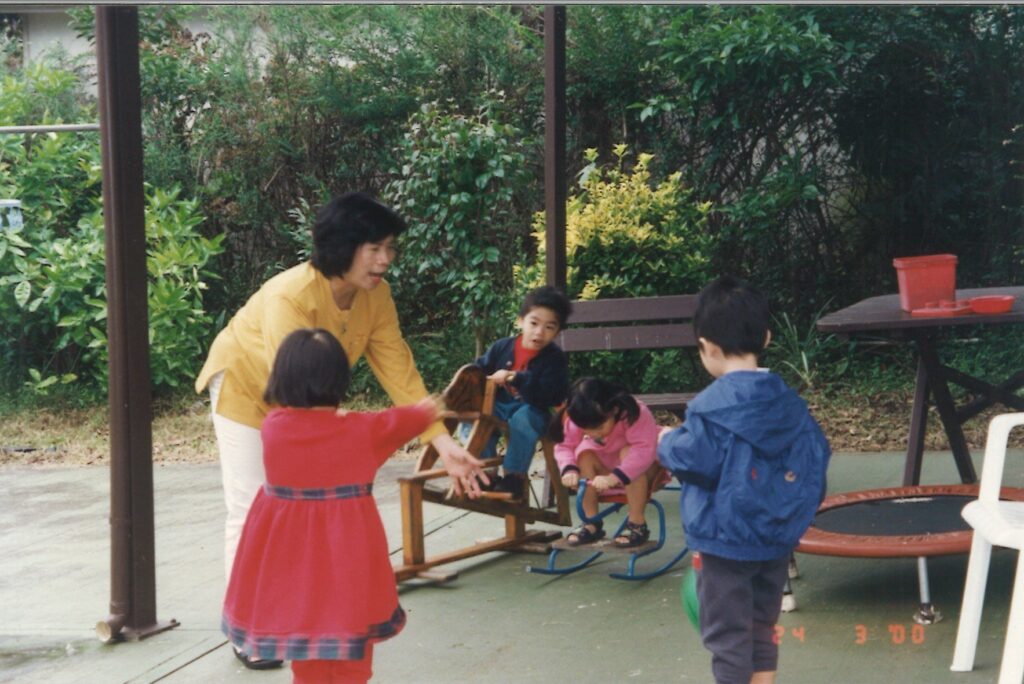
服務社不僅進行跨地區運作,還開始建立遊戲組(Playgroup),工作人員又需去照顧遊戲組,兼職的人做着全職的工作,服務社再次面臨挑戰。
🤔項目如何繼續發展?我們下期分享。
by Kitty Leong | Jul 1, 2026 | CASS Story - EN
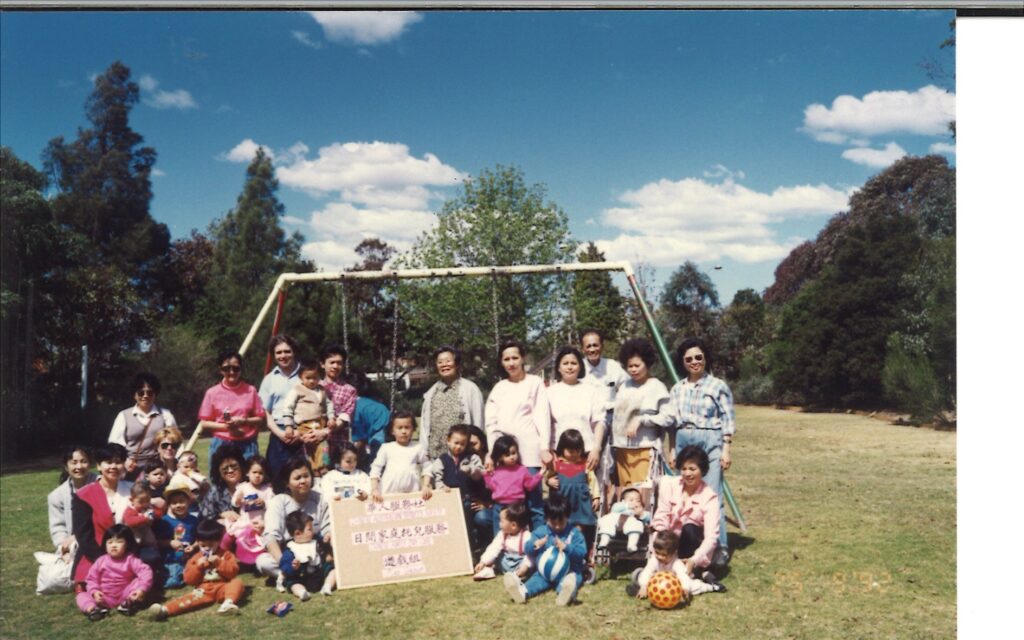
Even though there were no positive results from the Government regarding the application lodged by our Society for funding for the establishment of a Child Care Centre, the Board of Directors of our Society resolved that the founding aim of our Society, i.e. to provide child care service to the community, should still be realized even without Government’s funding assistance. In July 1982, it was resolved to provide a referral service through the telephone manned by volunteers to match parents in need of child care and caregivers wanting to provide child care service. The service was run in cooperation with Sydney Family Day Care (SFDC).
Ms. Maureen Hastings of SFDC strongly supported our service and admitted Chinese women who were interested in becoming caregivers. Our Society provided referrals when calls were received from parents looking for caregivers. During the few months’ operation, the service provided working opportunities for Chinese women with limited English to become caregivers. Chinese parents were also able to find culturally relevant child care service.
After a few months of operation, the self-organized ‘family day care’ service achieved positive results. Relevant government departments came to know about our endeavor and appreciated our initiative very much. They were impressed. Officers from the Office of Child Care met with our Society’s representatives and encouraged us to apply for special funding to employ a worker.
In November 1982, Henry wrote a submission to the Office of Child Care, detailing the work our Society was doing and explaining that with limited resources, our work was not perfect. There was a need to employ a worker to develop the referral service and requested funding.
After 2 months of waiting, in mid-January 1983, the good news came: The Federal Government approved our funding application! It would provide a 3-year funding to our Society to enable the employment of a paid worker to develop the referral service, titled “Family Day Care Development Service” (FDCDS). The Chinese Youth League agreed kindly to continue providing office space for the implementation of the project.
Considering that employing one full-time staff member might not be the best arrangement, having to take phone calls, conduct home visits, handle administrative work and do promotion all alone, the Board decided to employ 2 part-time workers. The recruitment news disseminated in the community quickly attracted applications. After interviews, 2 workers were selected: one was a Hong Kong student who had just graduated from UNSW Social Work study; the other was a teacher migrating from Malaysia. They were our Society’s first formal employees.
In March 1983, the Society started to have two employed part-time staff members to provide service. Having human resources to take up the work, the project proceeded with good results.
At the time, the economic environment of Australia was not good. Many people were unemployed. To lower the unemployment rate, the Government provided funding for organizations to provide jobs for the unemployed. The Board thus grasped the opportunity applying for funding. In the second half of 1983, our Society was successful in getting funding for the employment of an Office Assistant for six months, and an unemployed migrant, a teacher from Hong Kong, was employed.
The pilot project was limited to the cooperation with SFDC service and was limited to City of Sydney area. There were many enquiries from all over Sydney. The Board realized there was a need to extend our service provision to other areas in Sydney.
🤔There were geographical boundaries for each FDC service. How could the Board resolve the issue? Stay tuned for the next article!
by Kitty Leong | Jul 1, 2026 | CASS 的故事 - TW
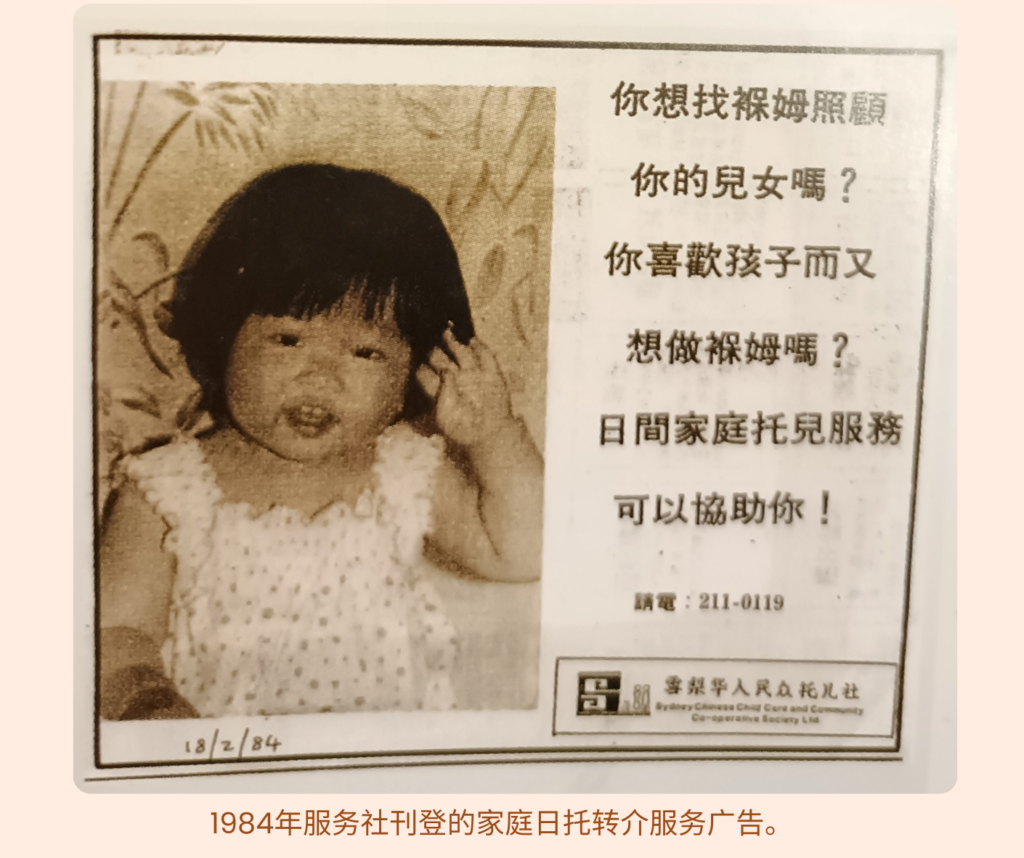
儘管最初計劃設立托兒中心向政府申請撥款沒成功,服務社董事局仍堅持要為社區提供服務的初心。1982年7月,董事局決定運營轉介中心,以義工執勤接電話,通過與Sydney Family Day Care(以下稱為SFDC)合作,為需要保姆的華人家庭與合適的華人保姆牽線搭橋。
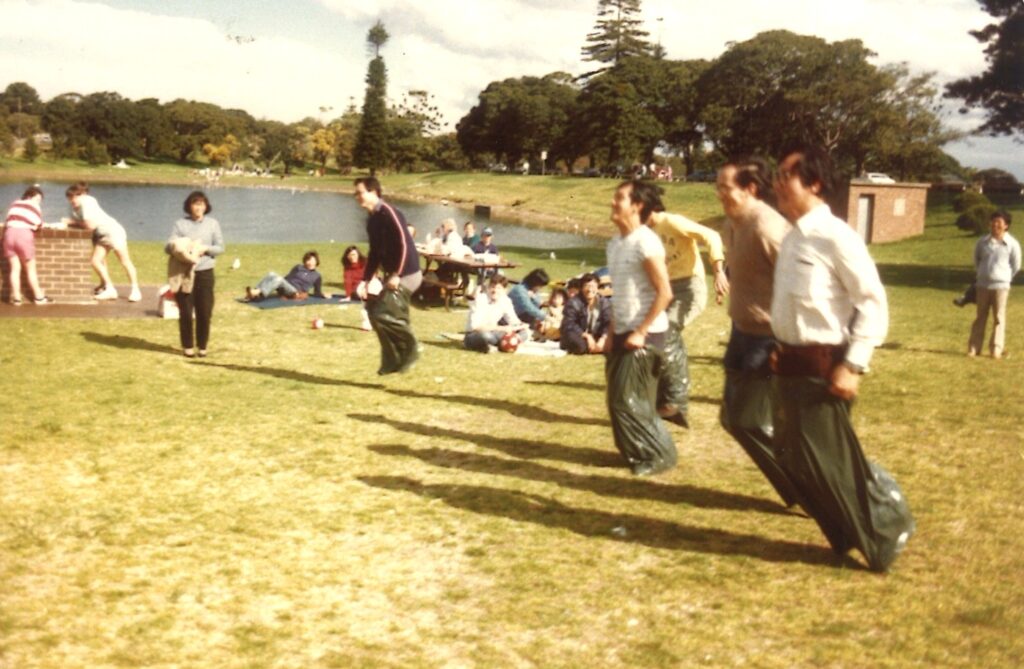
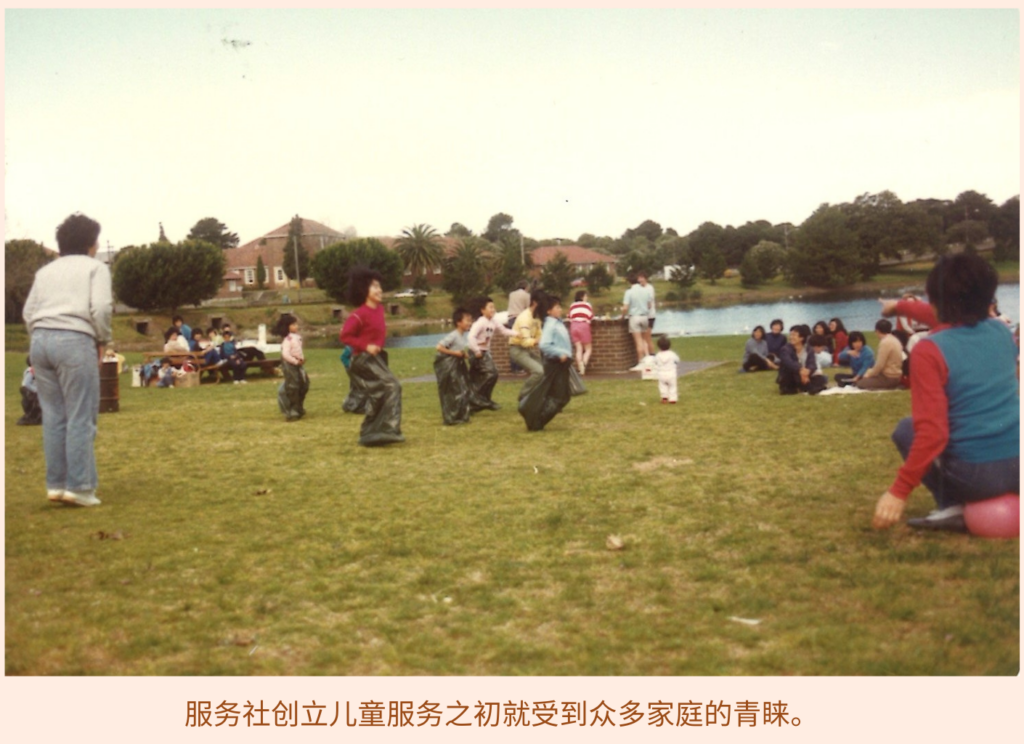
SFDC的執行人員Maureen Hastings給予大力支持,幫忙接收有興趣做保姆的華人,而有父母打電話來找保姆時,服務社則協調轉介。運營了三四個月後,項目幫到英語不好打算做保姆的人找到工作機會,華人家長也能為孩子找到托兒服務。漸漸地,服務社在社區打開了知名度。
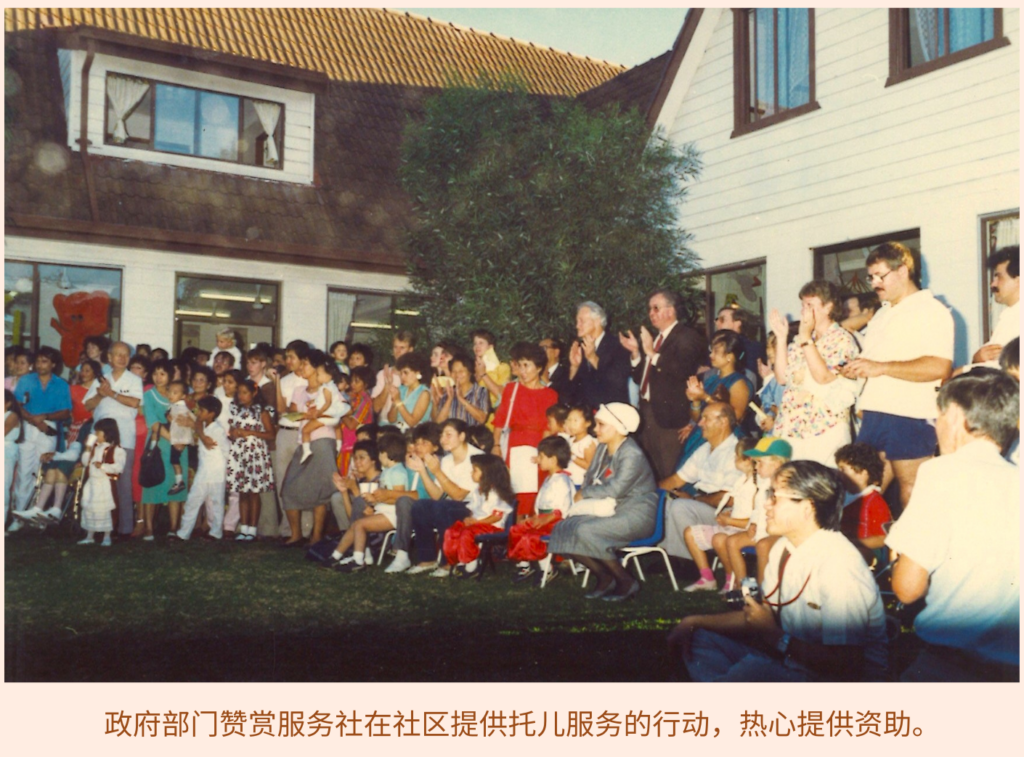
這項出於熱心的自發行動,消息很快傳到了聯邦政府托兒服務部在悉尼的辦公室(Office of Child Care),有關政府官員對服務社的做法十分讚賞,認為這是真正惠及社區的舉措,於是約見社負責人,並鼓勵提出申請特別撥款,以便能聘用一位員工。
在1982年11月,Henry寫了申請書給政府托兒服務辦公室,他描述了社正在做的事情,坦言條件有限、因此做得不完善,需要聘用一位專人來幫助開展這項轉介服務。請求提供撥款。
兩個多月後,約在1983年1月中,便收到了好消息:政府批准了撥款!將為服務社提供三年的資助,用於聘請一名全職員工,專門負責這項試驗性計劃——華裔社區 “家庭日托發展服務(Family Day Care Development Service,FDCDS)” 轉介服務。此時,僑青社繼續慷慨提供辦公場所。
考慮到請一位工作人員效果可能不理想,既要接電話、又要家訪、處理行政和推廣等,實在分身乏術,董事局決定把撥款拆分成兩份,聘請兩名兼職社工。很快,英文報紙上的招聘廣告吸引來了尋工者,經過面試,挑到合適人選:一位是 UNSW 剛畢業來自香港的社工;另一位是來自馬來西亞的教師移民。她們成為社最早的正式員工。
1983年3月,服務社終於有了兩名兼職員工,有了人力負責服務工作,項目開展更有成效。
當時的澳洲經濟不景氣,很多人失業,為了降低失業率,政府設立撥款給符合條件的機構,去聘用失業人士。社董事局看準機會,也申請撥款。在1983年下半年,成功拿到撥款:聘用一位失業者半年,結果聘用了一位從香港移民來的教師。
由於當時與SFDC合作其服務範圍僅限悉尼市轄區,而尋求社幫助的人,卻來自四面八方,董事局了解需要提供跨地區的服務。
🤔家庭日托跨地區服務在制度上是不允許的,那怎麼辦呢?我們下期分享。
by Kitty Leong | Jul 1, 2026 | CASS Story - EN
In March 1982, the CASS Board resolved an important position under the chairmanship of Henry, “Even without government funding, the founding aim of the Society, i.e. to provide child care service to the community, should still be realised.”
How could services be provided without funding? A group of enthusiastic and committed volunteers could be organised to take up the task. There were many such volunteers being involved in CASS.
The Board pondered on the question: What could volunteers do? What were the services that the community needed but would not require a lot of money to develop?
At that time, many young Chinese families were looking for caregivers to look after their children. However, there was not much information available, and parents did not know where to find suitable caregivers. On the other hand, many caregivers were looking for parents seeking care. CASS could provide a service to match the caregivers and the families!
The Directors understood that in Australia, caregivers looking after other people’s children had to abide by a set of Regulations. The service was called ‘Family Day Care’ (FDC). Caregivers had to be licensed to provide care legally. The government had regional agencies to manage the FDC service in the area.
The Society’s original plan was to set up a child care centre near Chinatown. Now that they had to change to FDC service, they needed to understand the different requirements. The Board thus approached Sydney Family Day Care which was managing the service in the Sydney city area. Their coordinator, Ms. Maureen Hastings, was enthusiastic and supportive of Henry’s ideas and the Society’s plan to develop service for the Chinese community. She provided the Directors with information and helped them to understand government’s requirements and regulations.
In July 1982, the Board resolved to provide a telephone referral service manned by volunteers to match parents in need of child care with caregivers wanting to provide child care service. The referral service was made possible through cooperation with Maureen Hastings.
A new question arose: where should the telephone be installed?
The Chairman of the Chinese Youth League (CYL), Mr. Peter Wong, was very supportive of the Society’s initiative to provide child care service and let the Society using their office venue free of charge to provide FDC service.
The team leapt into action. In the corner of the hall of CYL at 66A Dixon Street, Haymarket, a desk was set up and a telephone installed. The Society’s first service thus commenced operation.
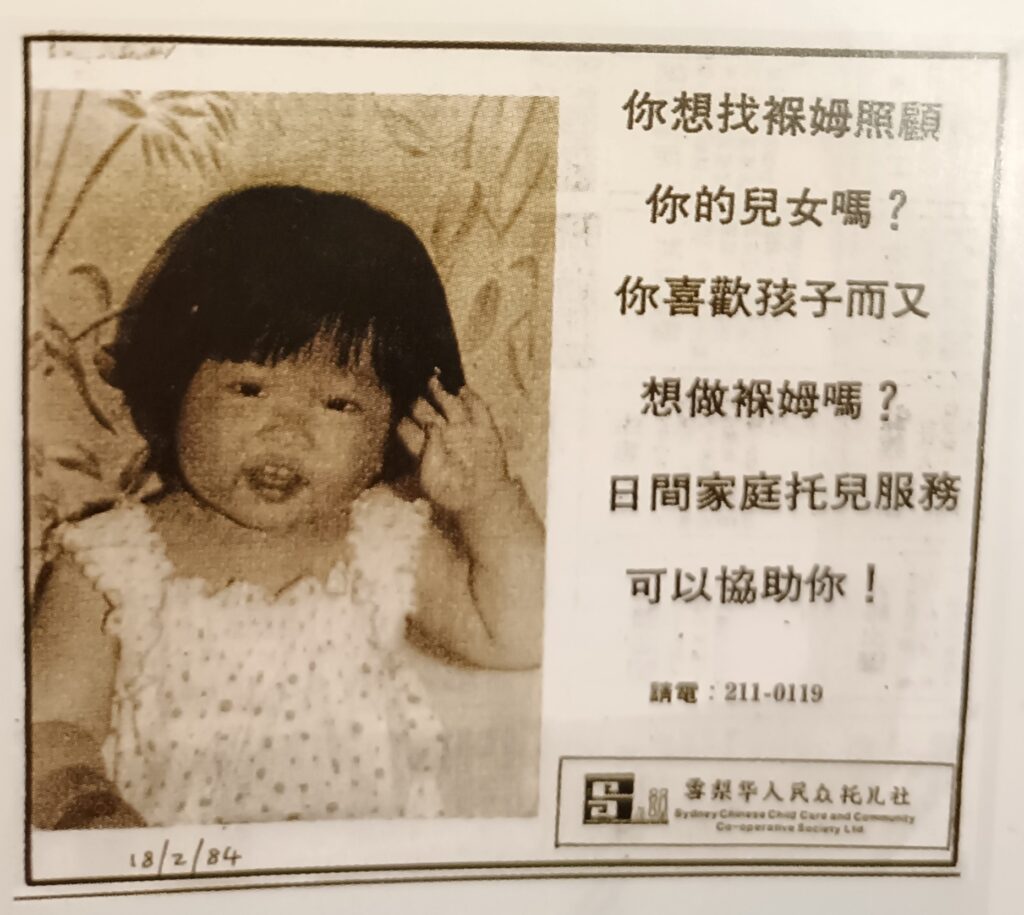
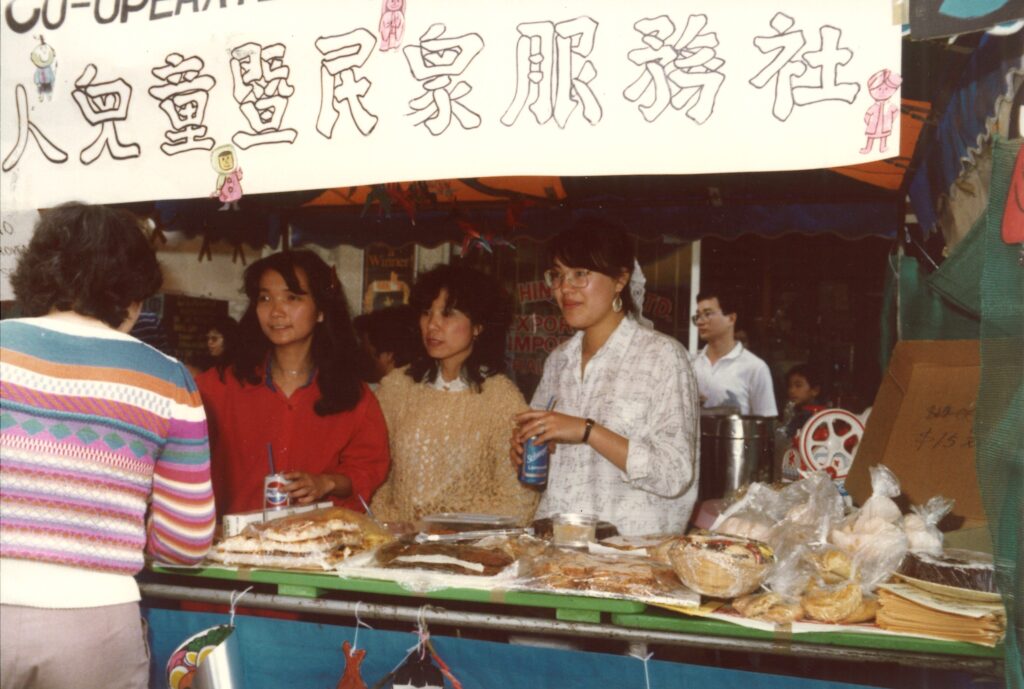
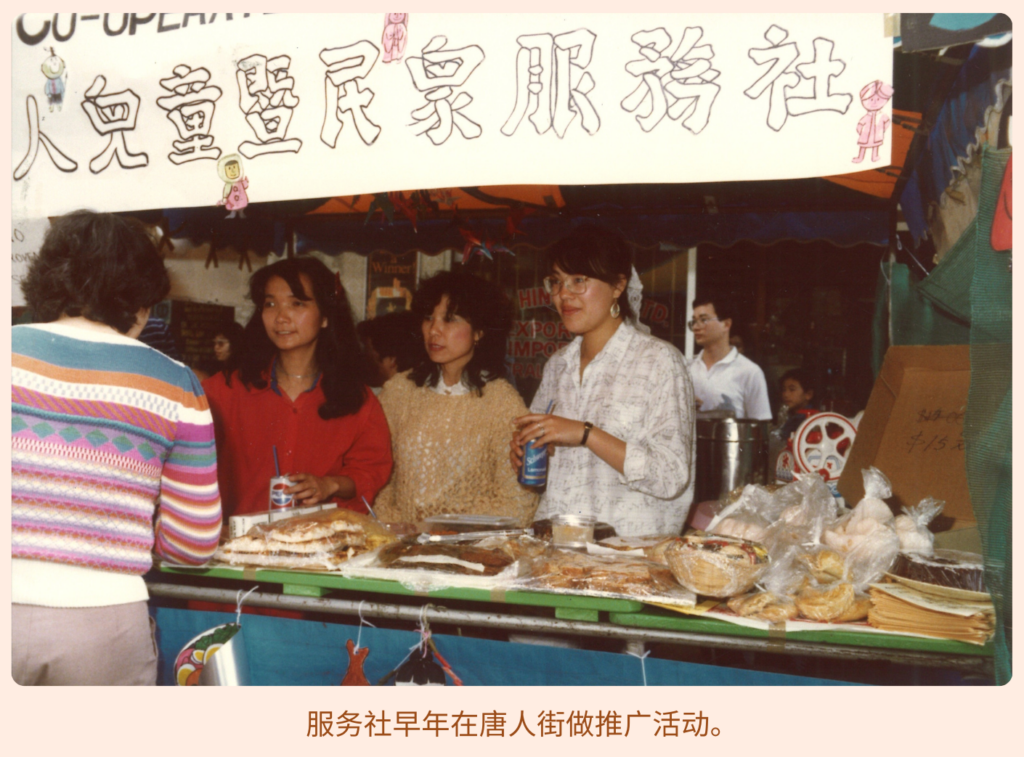
The directors and volunteers promoted the service through putting up posters in Chinatown and distributing flyers. Radio 2EA (later became SBS Radio) also broadcasted the information.
As Sydney Family Day Care could only accept children and caregivers in the City of Sydney area, those residing outside the area would not be able to use the service. The original plan was to run this pilot project in the City of Sydney only.
However, when the news was released, requests for this service were received from all over Sydney. Calls from people residing around Chinatown were very few. Many Chinese were living in other areas of Sydney but went to Chinatown to buy groceries, etc. After receiving information about the child care service, many people rang our Society to enquire. The Society thus took up the role of ‘translating government policies, explaining cultural needs and facilitating communication between different parties”.
🤔Would the pilot project be acknowledged by the authorities? Stay tuned for the next article!
by Kitty Leong | Jul 1, 2026 | CASS 的故事 - TW
1982年3月,服務社董事局在Henry主持下作出了一個重要的決定:“就算沒有政府撥款資助,向社區提供服務的立社宗旨,還是要設法實現。”
沒有錢,怎麼提供服務?可以組織一群熱心、有奉獻精神的義工來做;而在華人社區中,正有不少熱心人士願意當義工。
董事局成員們思考着:義工能做什麼?有什麼服務是既貼近社區需求、又不需要大量資金就能開展的呢?
當時很多年輕華裔家庭,要尋找保姆照顧孩子,但信息渠道少,常常不知去哪裡找合適的保姆,而保姆也苦於找不到僱主——所以可以提供服務,為雙方牽線搭橋!
董事們了解到:在澳洲如果保姆要照看孩子,官方是有法規管理的,服務行業被稱為“家庭日托” (Family Day Care)。提供服務的保姆,須有相關准證,才能合法運營。此外,政府在每個地區設有機構,管理該區的日托服務。
因社原本是計劃在唐人街附近設立托兒中心,如今要改為日托,需了解各方面的規定。於是董事局聯繫了雪梨市管理日托服務的機構,Sydney Family Day Care。該機構的負責人 Maureen Hastings女士非常熱心,並支持Henry的理念,欣賞社為社區開拓服務的做法。她為董事局成員們提供了資料,幫助大家了解政府對保姆的要求和標準。
在1982年7月,董事局決定運營轉介中心,以義工執勤接電話,通過與Maureen Hastings女士合作,為需要保姆的家庭匹配合適的保姆。
又一個困難來了:電話裝哪裡?
當時的僑青社主席黃寶榮,大力支持這項華人社區的初創托兒服務,免費借場地給服務社做“接線中心”,推行家庭日托服務。
說干就干,在德信街66A的禮堂一角,擺一張桌子,牽一條電話線,服務社的第一項服務就開始了。
接下來,董事和義工們開展了最初的推廣行動,在唐人街張貼廣告、派發傳單,並通過2EA電台(即今天的SBS)播出服務信息。
由於Sydney Family Day Care只能接受雪梨市域內的保姆和孩子,如果超出這個區域,就無法轉介到她這裡,所以最初的計劃是只在悉尼市開展試點。
沒想到消息發出去后,收到的諮詢電話來自悉尼的四面八方,反而是唐人街的電話不多。原來很多華人雖住別處,卻要到唐人街採購雜貨、燒臘等。知道服務社有保姆轉介服務后,便打電話來諮詢。服務社於是承擔起了“翻譯政府政策、解釋文化需求、協助雙方溝通”的角色。
🤔這項服務會獲得有關方面認可嗎?我們下期分享。
Page 7 of 11« First«...56789...»Last »
