by Lynne Wang | Jul 22, 2026 | CASS Story - EN
A ray of sunshine shone on CASS in 1986. The Board was focused on the development of child care services. With funding support from the Federal government, Campsie Child Care Centre had a total facelift and regulatory requirements were met.
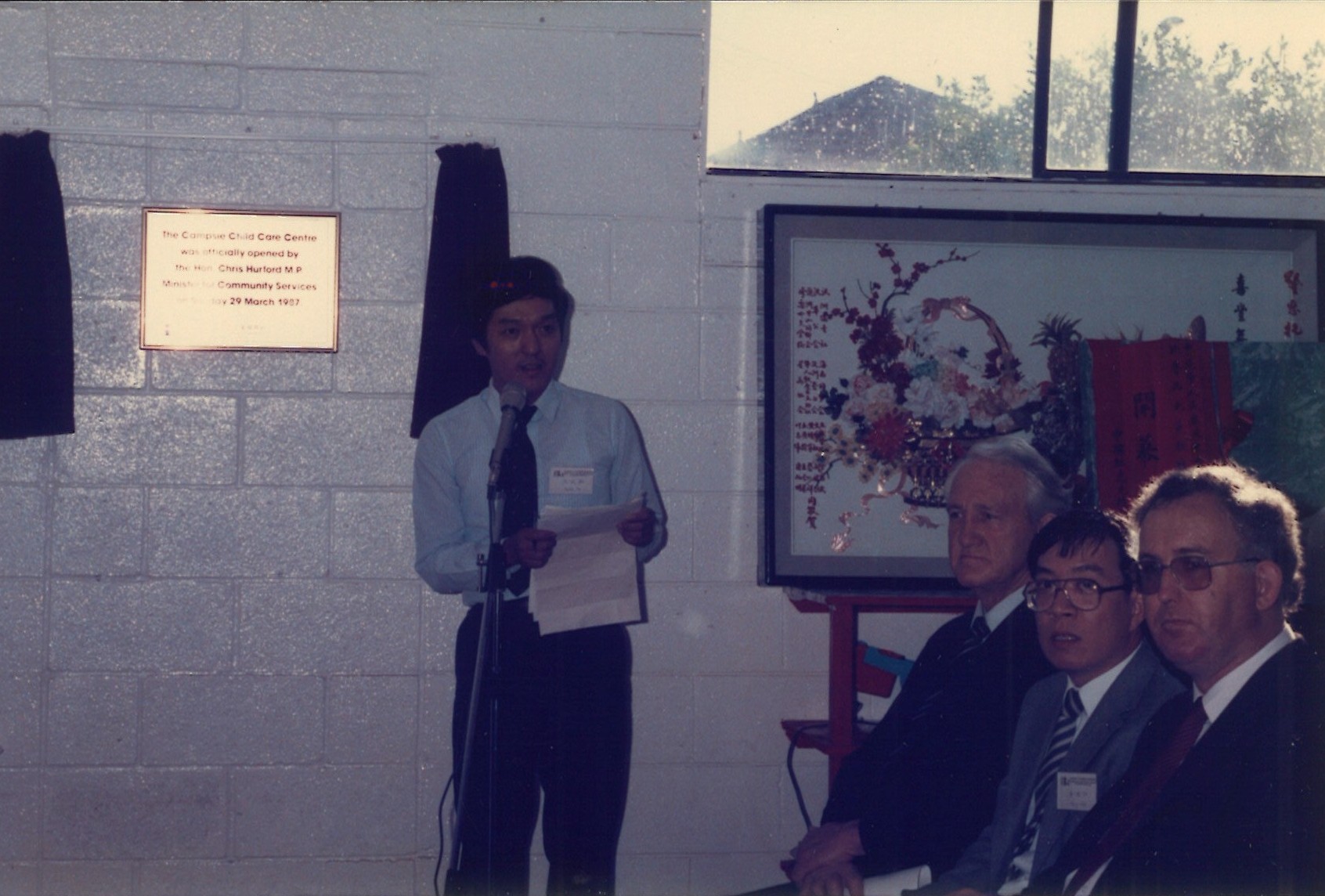
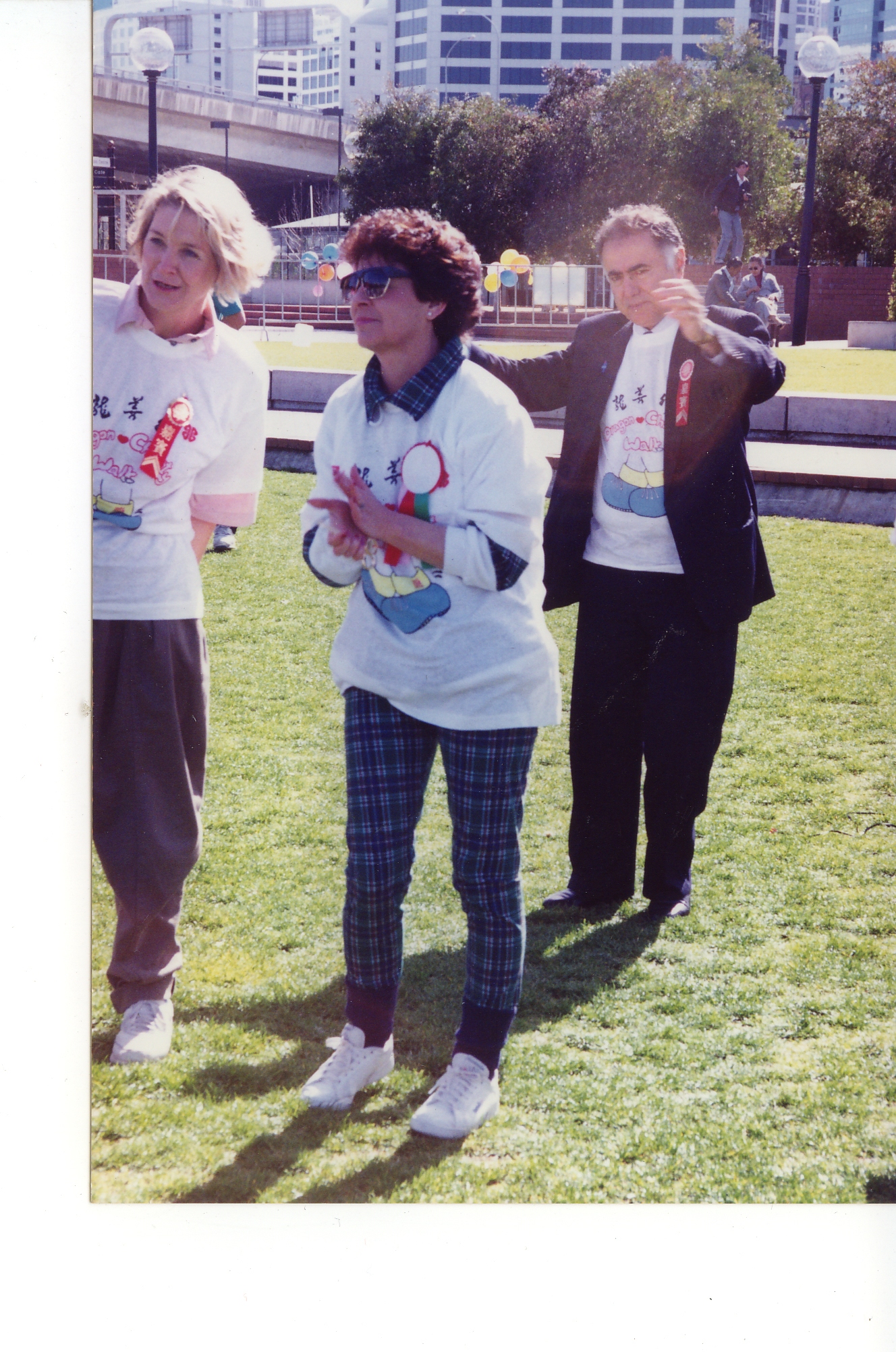
On the evening of 29 March 1987, Campsie Child Care Centre was filled with drumrolls and laughter. An official opening ceremony was held to mark the significant milestone.
The occasion was attended by members of the Board, Society members, parents and staff of the Child Care Centre, neighbours, federal and state politicians as well as councilors. Over 200 people participated in the celebrations.
The Opening Ceremony was conducted by the Hon. Tom Uren, Federal Minister for Territories and Local Government at the time, representing the Minister for Children and Families.
Lion dance was performed by 2 big and 2 small lions from the Chinese Youth League. They leapt and danced to the joyous rhythm of the drums. This was a scene never witnessed before by the local community, especially the neighbours.
This was the first grand celebration event organized by the Society. The solemn yet joyous spectacle created huge excitement in the community.
On the financial side, the interest rate for the mortgage of $40,000 for the purchase of No. 48 property was 21%! The Treasurer at the time, Dr. Leng Tan, was very concerned about the cash flow of the Society. However, she found that there was often unused cash in the bank account, so she used it to pay more off the loan. After only 2 years, in late 1987, the mortgage had been paid off totally. It was later discovered that parents using the child care service had to provide a 4-week holding deposit in advance as bond, enabling the Society to have a healthy cashflow.
With the purchase of the Campsie Child Care Centre, the Family Day Care office was moved to the Centre’s upstairs. The Service was well acknowledged by the federal department. The original three-year funding for 1983 to 1985 was extended.
The efforts of the Board of Directors and volunteers, their exceptional work performance, together with their genuine connections with the grassroots, had earned them approval from the government and the community. As their reputation grew, many community groups sought help from the Society with settlement and other daily issues.
There was a large influx of immigrants from Hong Kong and students from China at the time. They were not familiar with the local way of life – finding schools, seeking medical treatments, understanding the health system and seeking employment, etc. They needed assistance from the community for addressing their settlement needs.
With the founding aim of the Society at heart, Henry and the directors wanted to help all those in need. They provided assistance voluntarily in their spare time to all those who came to seek help.
The Society explored if the government would provide funding for settlement services. Unfortunately, funding for such services had already been allocated to other Chinese organizations. The Society’s funding applications in the subsequent years had not been successful.
During a chat with friends from the community, Henry realized there was another increasing need of the Chinese community – welfare service for the elderly.
🤔How would the Society expand the scope of services apart from child care services? Stay tuned for the next article!

by Lynne Wang | Jul 22, 2026 | CASS Story - EN
Childcare is an important service widely needed by families. The founding aim of our Society was to provide such service to the community. When there is a will, there is a way! The fete held on 7 December 1985 at Campsie Child Care Centre was a huge success. It managed to raise enough funds for the 10% deposit and legal fees for the purchase of the No 48 property.
There was another exciting news at the same time: The then Treasurer, Dr Leng Tan, managed to find a bank who was willing to provide a loan. However, using the excuse that our Society ‘lacked experience in child care business” and ‘unstable business’ the bank raised the interest rate to 21%, which was 4% above the market rate!
The enrolment at the Centre improved strongly and became stable. The purchase of the property was also complete. The Board of Directors of our Society could finally settle down and focus on the development of the child Care Centre.
When the kindergarten was handed over by the private owner, the facilities were worn out and did not meet regulatory requirements. After receiving government funding in late 1985, the Board used half a year to renovate the Centre while it was still in operation. The ceilings of the classrooms were thickened; the normal glass window panels in the rooms were replaced by safety glass; new children’s toilets were installed; the administration office was refurbished; new floorings were installed; worn out car tyres in the children’s playground were cleared and the sandpit was fixed.


Many volunteers came to help after work. They helped to move the furniture around and took up the painting work. Their involvement helped to lower the cost of the renovation.
Realizing the high demand for child care services, the Society considered expanding its services to include care for children from birth to 2 years. In mid-1986, the Centre received government funding to build an additional room to provide care for children under 2.
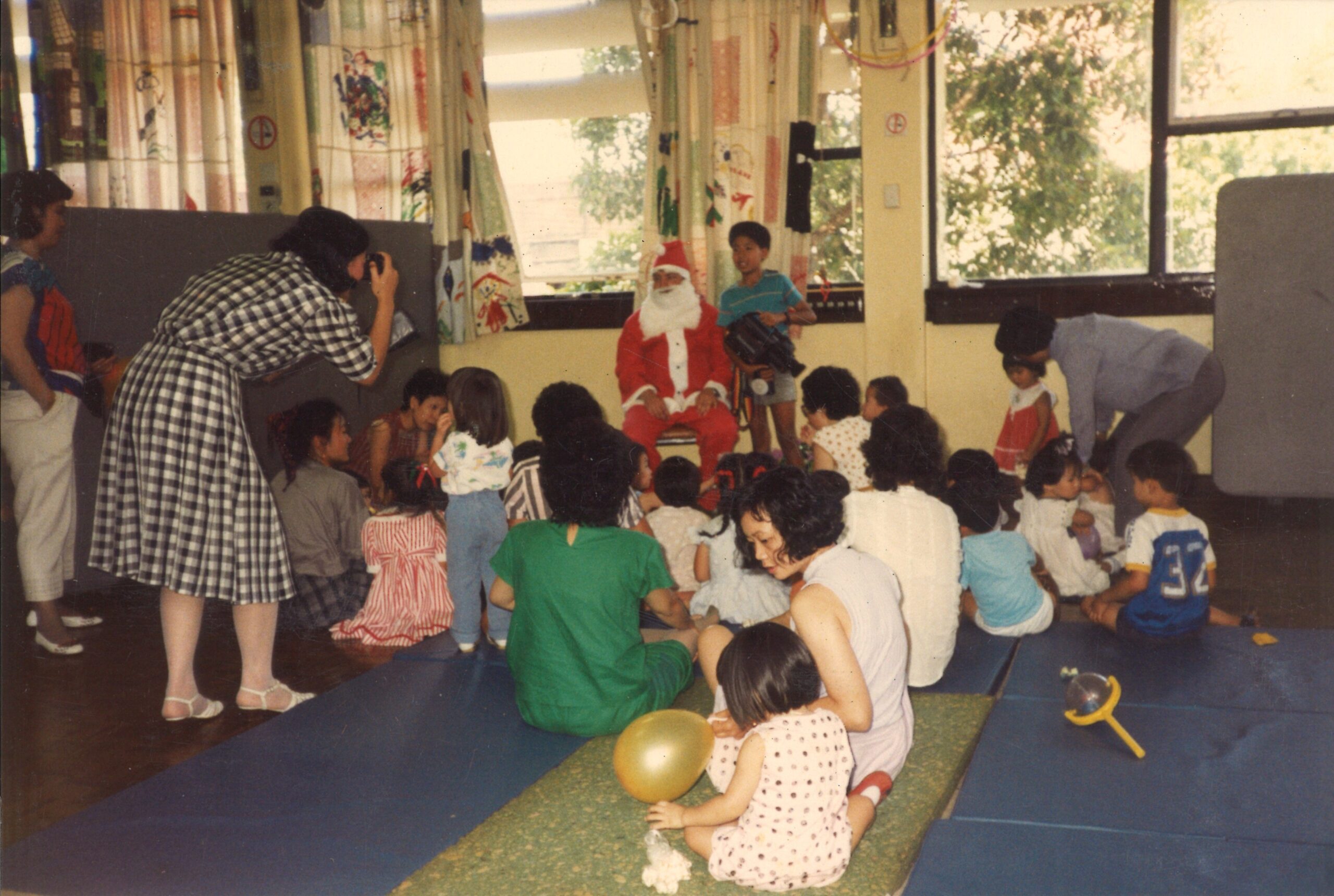
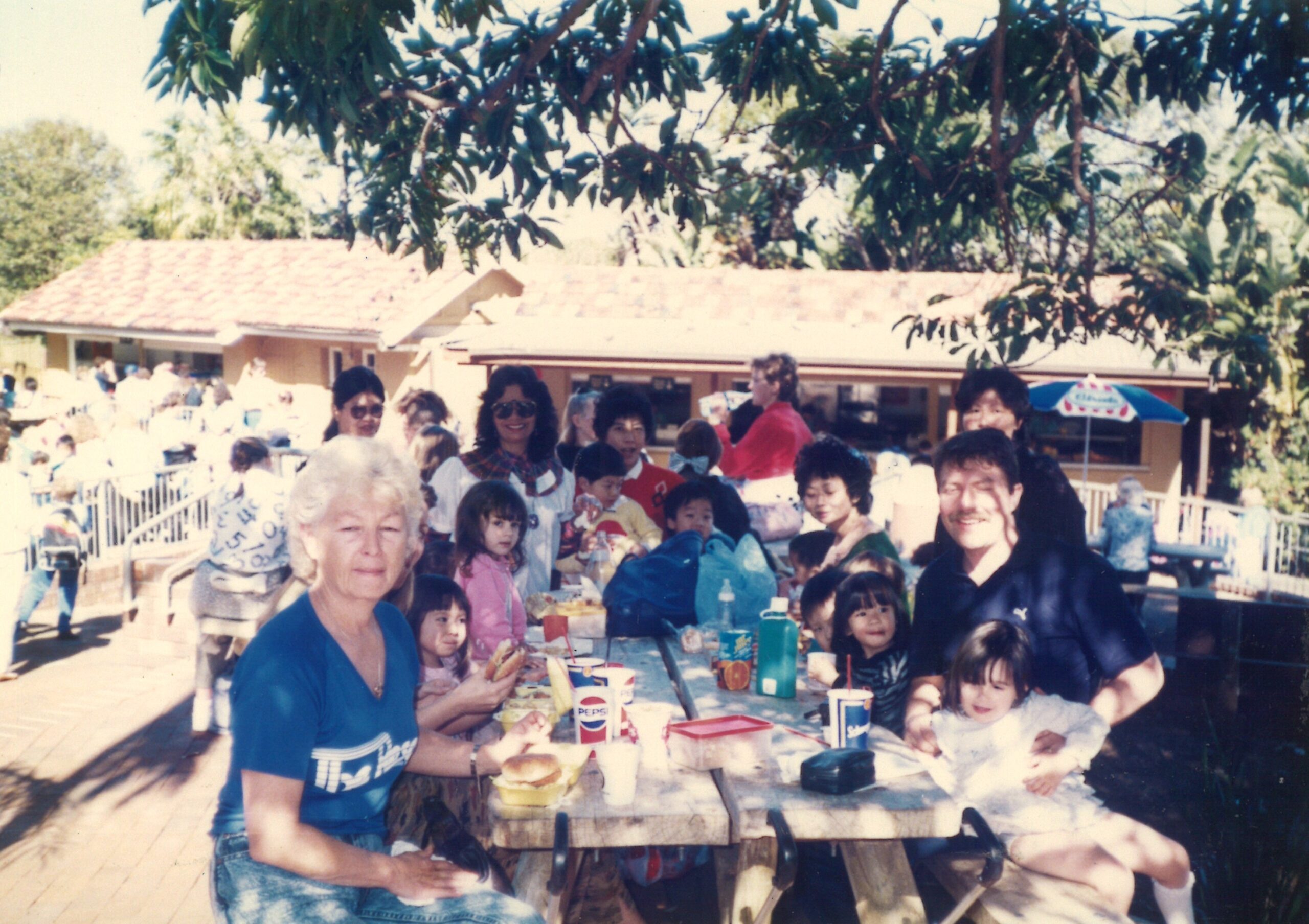
To implement multiculturalism, the Centre added Chinese and Korean in its teaching activities. They celebrated cultural festivals and taught children traditional craft such as lantern making and dragon dance during cultural celebrations. Excursions were also organized for children to visit community facilities such as fire stations.

There was also a high demand for Before and After School care. Around 40 school aged children from the two nearby schools, Campsie Public School and Harcourt Public School, used the service. Schools at that time seldom provided the service. As the Centre did not have the financial resources to purchase a bus, the children and their educators had to walk together to and from school, rain or shine. It was certainly trying for all, but the service was in high demand.
In the early morning when most of the Centre’s children had not come, the students and the young children could share the playground. However, in the afternoon, when both the afterschool care children and child care children were around, they could not share the playground. Activities for the afterschool care children were held in two rooms upstairs.
With the joint effort of the Directors and volunteers, renovations were carried out at a minimum cost. They gradually transformed the worn-out facility into a child Care Centre trusted by families in the community.
🤔There was finally a glimmer of hope for our Society! What would be the next development? Stay tuned for the next article!
by Lynne Wang | Jul 22, 2026 | CASS Story - EN
With the abolition of the White Australia Policy in the early 1970s, Australia began to implement the Multiculturalism Policy. The founding of CASS was made possible by a group of passionate people contributing their efforts to meet the social needs of the community. They raised concerns about issues affecting the rights and benefits of the community. As such, they had close ties and constant communication with the community.

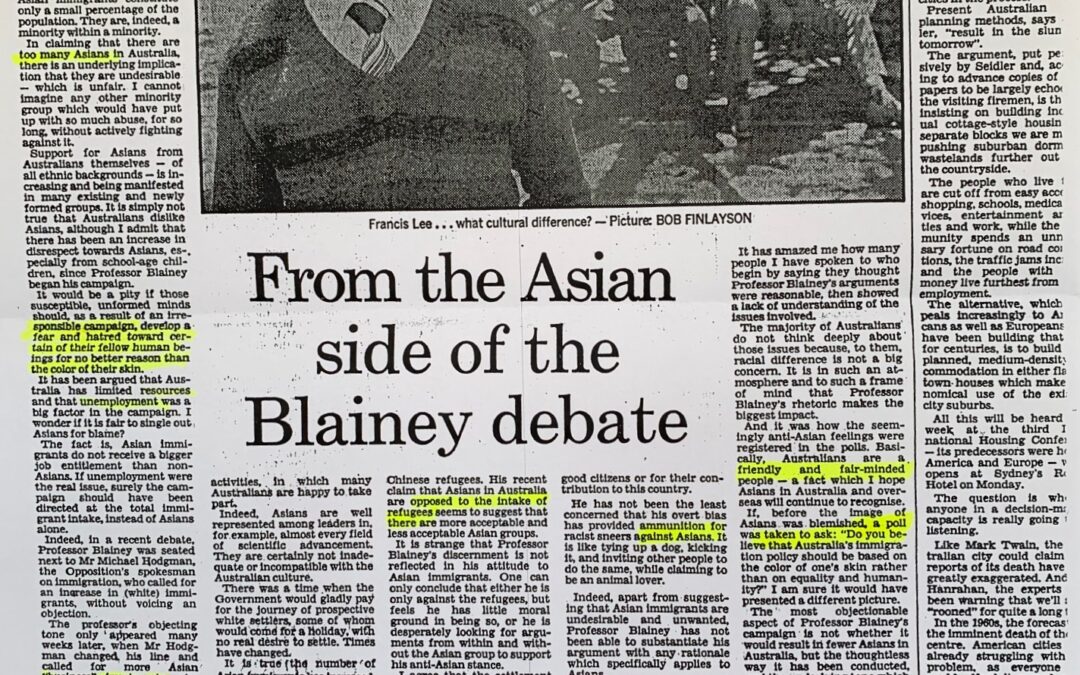
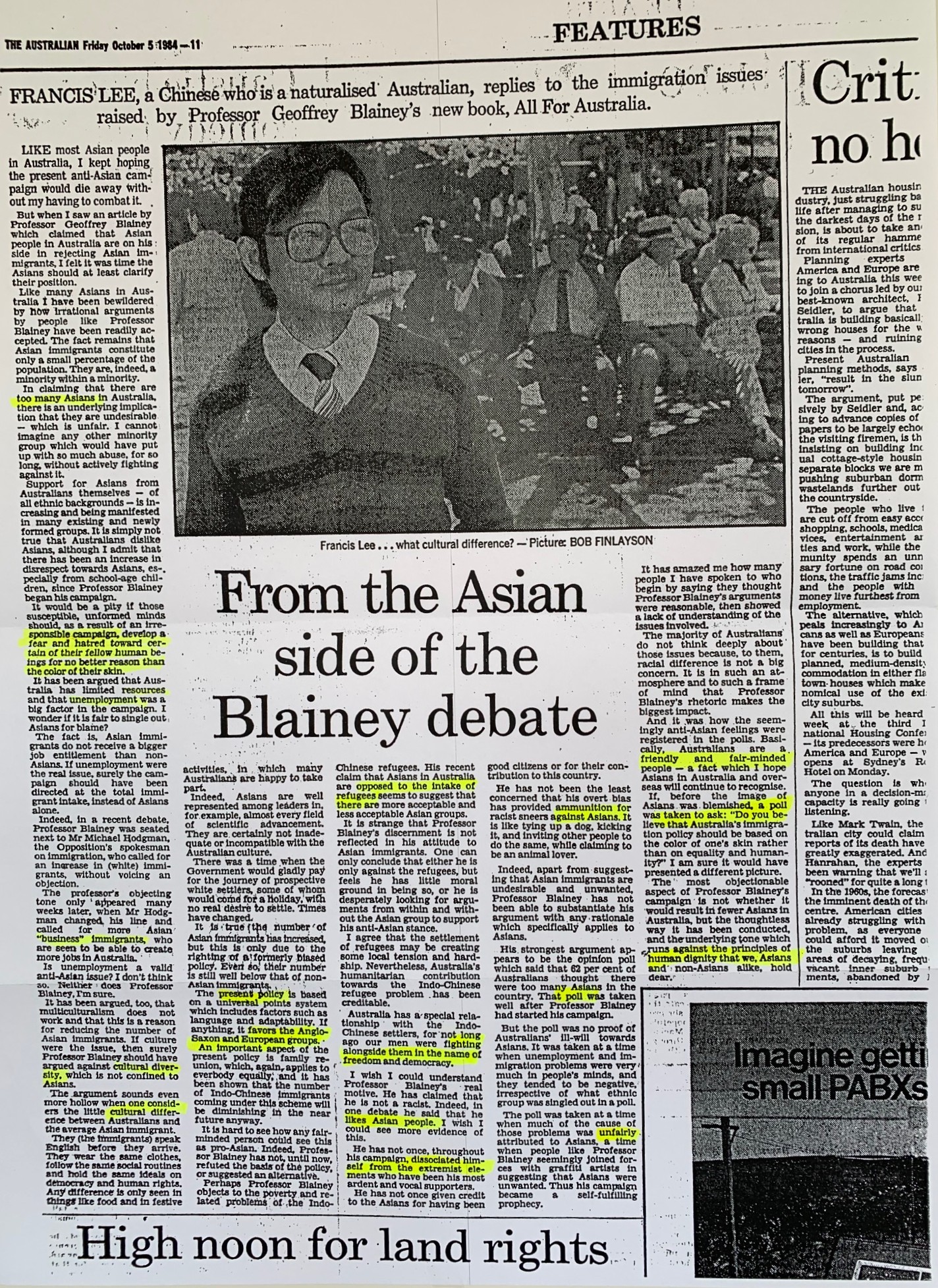
Multiculturalism was often met with resistance. In March 1984, a famous Australian historian Professor Geoffrey Blainey had repeatedly expressed his opposition to multicultural policy at important meetings, voicing his concerns that it would damage the country and affect the benefits of majority Australians. John Howard, who was a federal member of parliament at the time and later became Prime Minister, openly supported the views of Professor Blainey and fortified anti-Asian remarks.
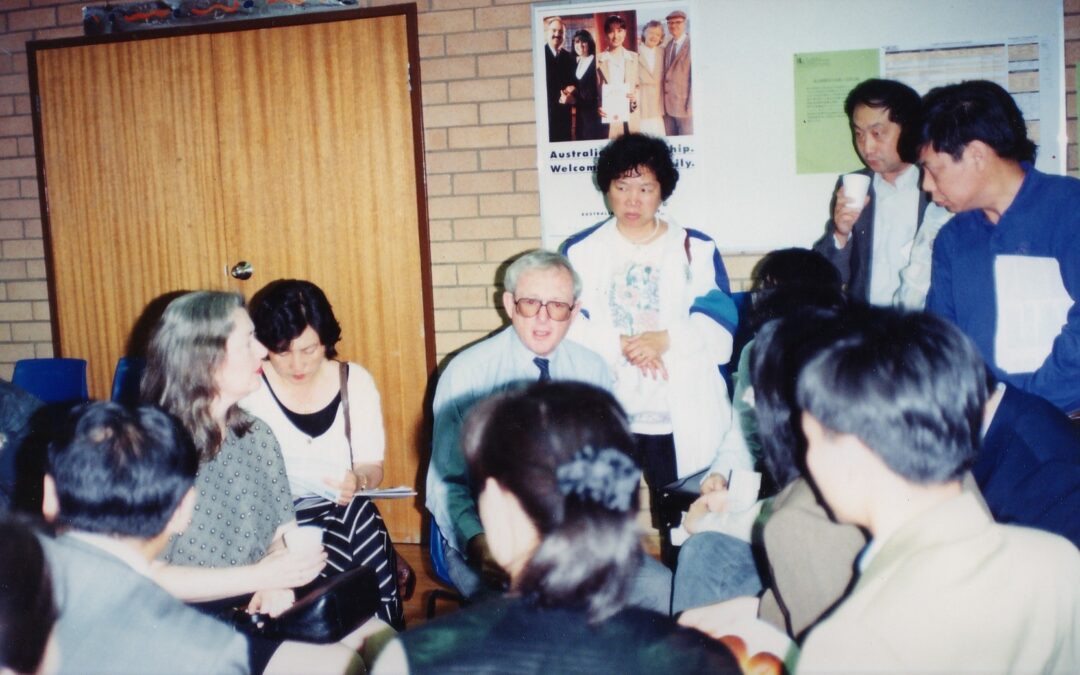
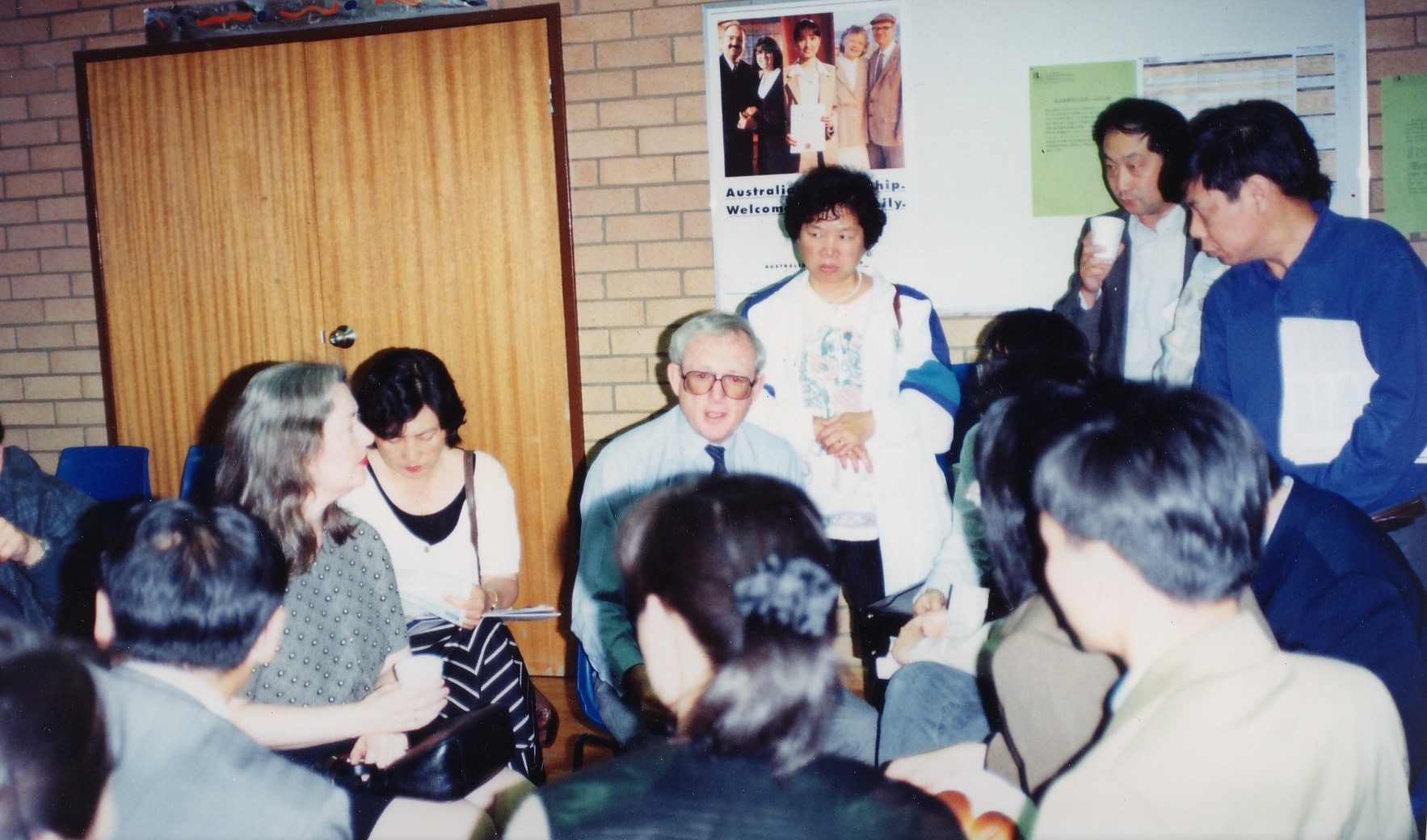
Facing political development that would affect the rights and equity of the Asian communities, the Board of our Society believed there was a need to raise awareness and concerns in the community and respond. In March 1985, the Board held a seminar at the Campsie Child Care Centre to discuss the viewpoints of Professor Blainey and Mr. Howard and explore the reasons of their concerns and impacts. Over 20 community members attended the seminar, and a record of the discussion was submitted to relevant government departments.
On the other hand, things began to settle down after the Union visit in August 1985. The Board of our Society began its work to solve the financial target of raising $40,000 for the purchase of No. 48 property.
There was suggestion to hold a fete to raise funds. Board members leapt into action. They started promoting the activity in earnest: printing flyers, placing advertisements in newspapers, promoting them on 2EA radio, and volunteers distributing flyers in the streets.
The community responded well in donating goods for garage sale. After learning that the fete was to raise funds for the child care centre, community members and members of the Society showed their interest in the future of the next generation. They were enthusiastic about donating toys, clothes and reusable household items. Some even donated whole boxes of goods. Many others joined as volunteers to help in the work of organising the fete.
On Saturday 7 December, the fete was held at the child care centre. Life was simple and frugal at the time. When people heard there were goods to be sold cheaply, residents from the neighborhood came to have a look.

The day was filled with crowds and multiculturalism was showcased. People crowded in front of the stores selling secondhand clothes, sundries and toys. The food stalls were the most popular. From homemade Asian delicacies to Australian barbeque sausages and ice-cream, people were lining in queues. Families also enjoyed children’s crafts, games and lucky draw.
Witnessing the joyous atmosphere and the success of the fete, people in the neighborhood were impressed by the capability of the Society and its connection with the community.

The sale of secondhand clothing, sundries, toys, food and raffles delivered good results. After a hard day’s work, the organizers realized that over $4,000 was raised. It managed to raise enough funds to pay for the 10% deposit and the legal fees connected with the purchase of the No. 48 property. It was one of the most successful fundraising activities in the history of CASS.
🤔Was this a turning point in the development of the Society? There’s more to share in the next article.
by Lynne Wang | Jul 22, 2026 | CASS Story - EN
The Union plays an important role in the relationship between employer and employee. An organization employing staff needs to understand various relevant legislations, or else it will land itself in trouble. During the initial period of its operation, Campsie Child Care Centre experienced trouble after a visit by a Union official.
In the middle of 1985 when the Society thought everything was settling down at Campsie Child Care Centre, the Centre Director received a phone call unexpectedly from an official of the Union one day, saying they would be paying a visit to the Centre two days later.
The Centre Director immediately informed Board Members. Knowing that the Union was not easy to handle, the Board naively turned down the request of the Union to avoid contact with them. The reason they gave was ‘it was not convenient to receive them during office hours.’
Two days later, a Union official presented herself at the Centre at the scheduled time. She talked with some staff members and requested to inspect the daily staff attendance records.
The visit was a consequence of complaints lodged by two staff members who were Union members. They complained to the Union that the Society was breaching regulations as they were not paid correctly.
After checking the staff’s sign-in attendance sheets, the Union official said, “In the last 7 to 8 months, these 2 staff members started their work at 6:15am. This proves that they have been asked to start work early. According to the industry Award, work before 6:30am is considered shift work. The staff members should be paid penalty rates.”
Board members were shocked. It was the staff members who requested to come early as the Centre opened at 6:30am, they said they would start work 15 minutes earlier to prepare the place, and they would leave earlier. Board members thought the 2 staff members very thoughtful and responsible, never realizing it was a ploy!
Based on the calculation, back paying the 6 months with penalty rate would amount to $10,000 per worker. This would be an additional burden on the newly operating Centre with limited financial resources.

The Union’s attitude was very firm. The inexperienced directors immediately sought assistance from volunteer solicitor, Vivienne Abraham. After listening to the situation, she pointed out that the Society had made a huge mistake. According to the Australian labour legislation, the Union has the right to inspect a workplace and talk to employees after giving notice. Following the receipt of notice, the employer cannot turn down their request, and neither can they fight against the Union.
Vivienne helped to negotiate with the Union. In the end, the Society had to pay about $4,000 to each staff member. She also advised the Board of Directors that they could not penalize the 2 staff members afterwards.
The 2 staff members resigned soon after the episode. The Society had learnt a big lesson from the episode.
First, one cannot ignore the power of the Union. In Australia, many workers in the child care, nursing and teaching industries join the Union. The Union has legal supervising power. After the episode, the Society would cooperate and meet with the Union’s request whenever they receive notice of visits.
Secondly, each industry has its own Award. Employers must follow the Award in terms of working hours, breaks and pay.
After the “Union incident”, the Society has learnt how to sail forward smoothly in line with employment legislation.
🤔Did the Society face further difficulties? Stay tuned for the next article!

by Lynne Wang | Jul 22, 2026 | CASS Story - EN
With financial support from the Australian Government, the Society bought the Campsie Kindergarten at the end of 1984 and fulfilled its founding aim of operating a child care centre. The Board of Directors were excited about the new development and tended to the Society’s affairs with renewed energy. However, because of their lack of experience in child care business, they were faced with a series of challenges.
The first task was to apply to the relevant department of NSW government for a license to operate Campsie Child Care Centre and register the change of ownership. During the process, they were notified by the Department that based on its record, the kindergarten did not meet licensing requirements. Rectification work had to be carried out before it could operate.
Everyone was frustrated. The kindergarten bought had already been in operation for over 20 years without compliant issues. It seemed that the Department had not inspected the kindergarten during that time and did not demand any renovation. Now that the kindergarten had a new owner, they immediately ordered for rectification works or else it had to cease operation. It was very unfair.
The rectification works included the following: The thickness of the ceiling panels did not meet fire safety standards, the windows were not safety glasses and did not meet legal requirement; there were not enough children’s toilets; there was no space for staff members to do their preparation and administration work; floorings were torn and needed replacement; facilities were inadequate and there was a lack of facilities for children to play. The total cost of the renovation was more than $30,000.

Luckily, the federal government department was willing to take up the matter and liaise with the state department, and it agreed to provide funding for the renovation. The process for the Federal funding to be made available would take some time, hence, the Child Care Centre was given a transition period of 6 months so that it could start operation.
The Society then informed parents of the change of ownership. In an unexpected twist, many parents withdrew their children from care and the enrolment dropped to half. Parents did not know the Society and were skeptical of the Society’s ability to manage the services.
On the other hand, the Society was endeavouring to recruit a Centre Director but received no application. At the end, it had to appoint one of the staff members in the Family Day Care team to take up the position. However, the new Director lacked experience, making the operating work more difficult.
To save financial resources, many volunteers came forward to help. They spent three weekends carrying out some of the renovation works at the Centre, including painting and improving the playground. The Board directors often held meetings late into the evening to prepare the business to commence operation.
Campsie Child Care Centre commenced operation on 29 January 1985, providing long day care, before and after school care.
Owing to the low enrolment, the Society faced enormous financial pressure. The Federal department informed that since the Society was a not-for-profit organization, at the time, it could apply for operational subsidy from the state department. The Society managed to receive funding eventually.
After a few months of hard work, the number of children gradually increased, and the financial situation became more stable.
Suddenly one day, the Centre received a phone call from the Union, saying that they would visit the Centre for an inspection.
🤔What should the Society do? We will continue the story in the next article!
by Kitty Leong | Jul 1, 2026 | CASS Story - EN
In early 1984, our Society received a piece of good news, “A private kindergarten in Campsie was for sale. The Government was worried that developers might buy the property leading to a loss of child care places, and so the Government was willing to provide funding for the Society to buy the place.”
The Board of our Society was ambivalent after receiving the news. The original plan of our Society was to operate a child care centre in Sydney Chinatown area, not in Campsie. However, after considering that it would be a good opportunity to learn how to operate a child care centre and accumulate experience, the Board resolved to accept the challenge.
Facilitated by the Federal Department, the Society met with the owner of “Campsie Kindergarten’ in early September 1984 to negotiate about the purchase of the place.
The private kindergarten was located at 44 Sixth Avenue, Campsie. Both sides quickly agreed on the purchase price of Aus$250,000.
During the negotiations, it was discovered that the vendor also owned the property next door at 48 Sixth Avenue. It was a dilapidated warehouse and priced at A$40,000. The vendor would only sell the kindergarten if the Society would buy together with the warehouse.
There was a serious problem: the Government would only provide the Society with funding to purchase the kindergarten and would not provide funding for any property unrelated to the child care service.
This posed a headache for the Society: If the Society did not have A$40,000 to purchase the No. 48 property, the Government’s funding of A$250,000 would be lost. Where could our Society find A$40,000?
Our Society did not have any financial resources at that time. Neither did it run any projects or service that would generate income. When our Society approached banks or financial institutions for loans, all applications were knocked back. The responses were the same: How could you manage to repay the loans?
The Board deliberated the issue many times and finally came up with a solution in early November 1984. It was suggested settling the purchase of the No. 44 kindergarten property first and requested the vendor to give our Society one year’s time to settle the property at No. 48 giving our Society time to organize fundraising activities. Some members agreed to put up their personal property as financial guarantees. The vendor accepted the plan.
Funding was received from the Federal Government, and the purchase of the kindergarten property was settled at the end of 1984. An agreement was signed with the vendor to settle the property at No. 48 a year later. This agreement was made possible by the financial guarantee provided by Dr. Leng Tan, Dr. Tony Goh, Dr. Cecilia Fong and Mr. Henry Pan using their personal properties.
Everyone was happy and celebrated the purchase of the kindergarten which was renamed as Campsie Child Care Centre. Work also commenced to recruit staff members.
No one expected it to be a hot potato!
Relevant government departments began to come knocking on the door and said that the kindergarten did not meet regulations and rectification works were needed before it could operate. After contacting the trades people, the works were estimated to cost at least Aus$30,000.
When parents heard that the Child Care Centre was owned by Chinese, many withdrew their children from the Centre. Only half of the originally enrolled children stayed.
🤔Revenue was drastically reduced while there was extra cost for the renovation works. How would the inexperienced Society handle the situation? Stay tuned for the next episode!