No.020 Children’s Drama Class

No.020 Children’s Drama Class

Like many Chinese migrants, our Society’s directors and volunteers also sent their children to Chinese School to learn Chinese language. During their conversations, they often talked about how the children felt the Chinese classes were boring and were not motivating, leading to unsatisfactory learning outcomes. In 1989, some directors suggested the idea of using drama to motivate children’s interest in learning Chinese language.

Starting the drama class required professional teaching personnel. By chance, Henry met a couple, William Yu and his wife Yanni Wang, who were overseas Chinese students then. They were graduates of The China Central Academy of Drama who were perfect candidates for running the drama class. After knowing the situation, they happily agreed to teach the class.

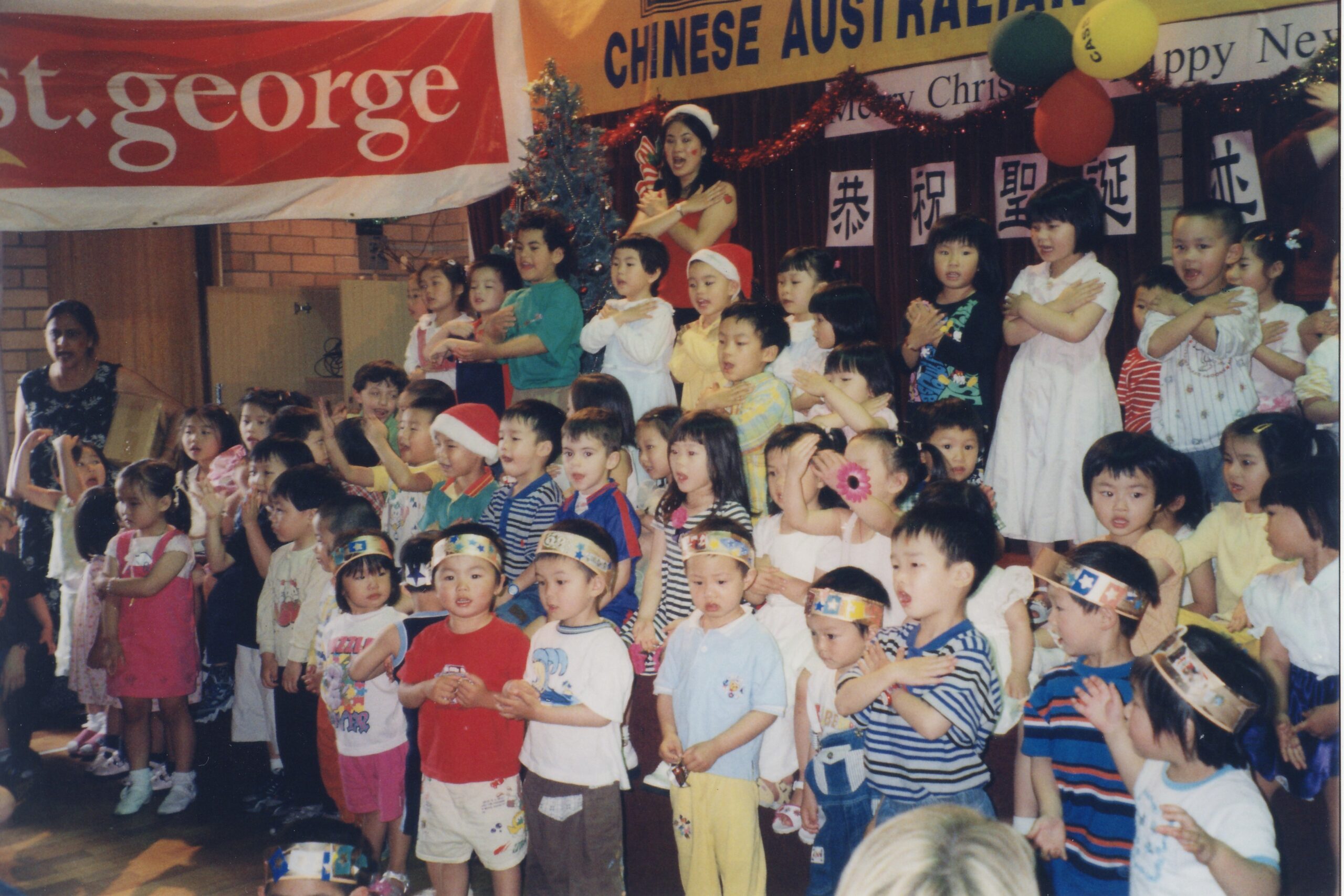
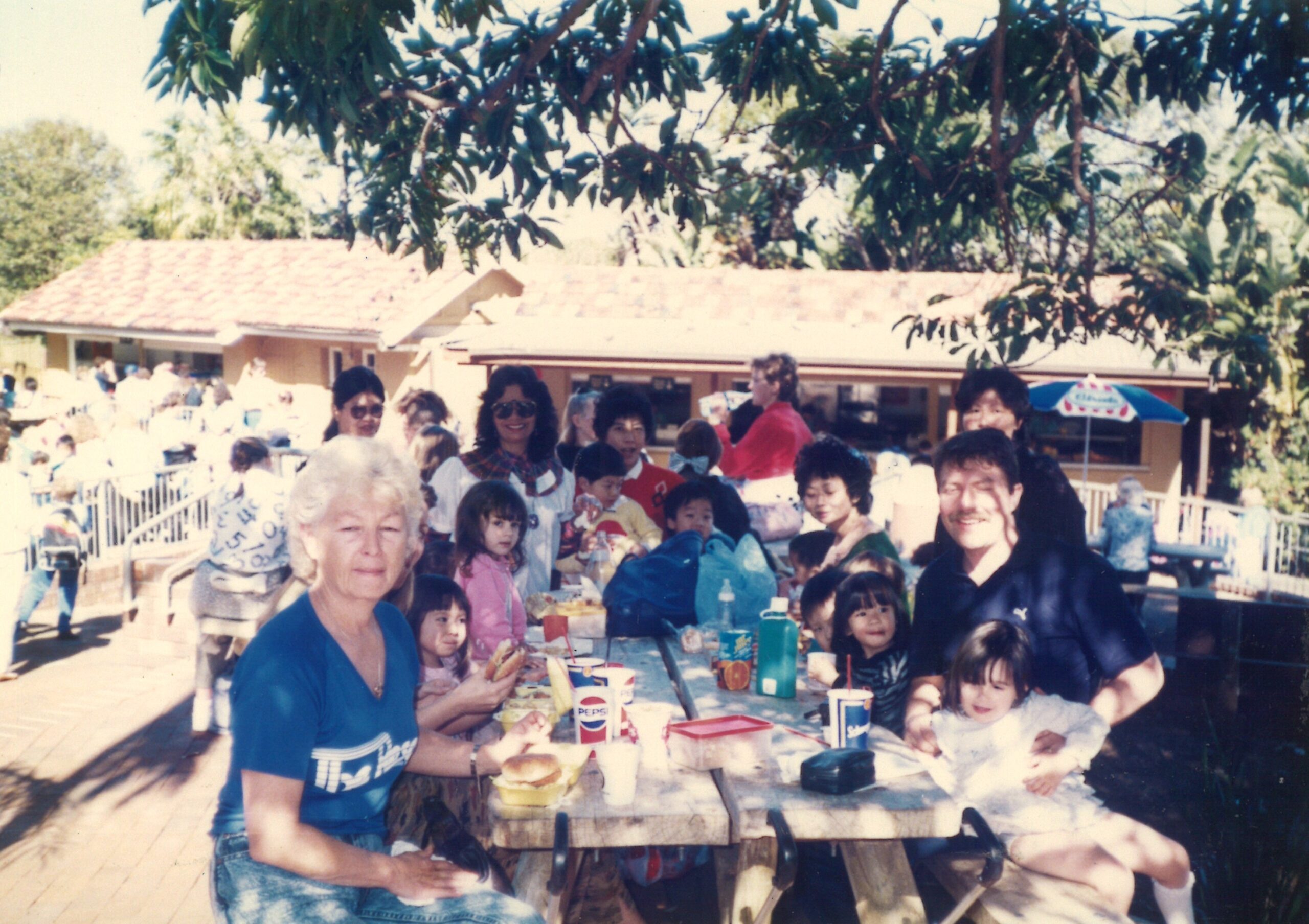
The Children’s Drama class of our Society started in October 1989. Many children of our Society’s directors and volunteers showed interest in joining the class, including Henry’s two daughters.

Half a year later, our Society staged a grand Cultural Concert at Willoughby Town Hall to raise funds for the Elderly Home Project of EACH. Children of the drama class performed a short drama titled “The Little Crayon”. After the performance, feedback  received from audiences was very good and positive. Children and their parents felt a strong sense of encouragement.

As more students enrolled in the drama class, the number of teachers had also increased. These included Jian Chen, a veteran Hong Kong media personality who had also worked for the Shanghai television station and she taught the children singing and voice projection; Yi Hu of the Suzhou Song and Dance Troupe taught dancing. There was also a couple, Huili Wang and her husband, Lingsun Hu, who were experienced professionals teaching children’s drama. Their participation strengthened the academic personnel of the children’s drama class.

With the strong team of expertise, William Yu came up with a daring idea to stage a large-scale children’s drama performance. His idea was strongly supported by our Society’s Board. Decision was made in October 1990 to stage a large-scale fairy tale drama “Ma-lan-hua” consisting of 6 scenes. The performance would again be raising fund for EACH.

“Ma-lan-hua” was a huge production. There were many characters in the story and they all needed special costumes, together with props and backdrops. To ensure an excellent outcome, children stayed back after their drama class every Saturday to rehearse.

The newly built Campsie Activity Hall provided an ideal venue for the rehearsal and practice. The activity space was large and kitchen facilities were adequate. The hall became a busy place on every Saturday. Children were enthusiastically rehearsing while the team of over 50 volunteers worked on the costumes, props and preparing meals. Henry’s wife, Sue Mok, was one of the backbones of the volunteer team responsible for making costumes and preparing meals.

Today Henry is still reminiscent of those weekends when everyone was busy rehearsing and working on the performance. Everyone was working towards the same goal: raising fund for EACH and providing an opportunity for the children to shine on stage. The team spirit was enormously strong, with everyone supporting and encouraging one another.

🤔 How did the “Ma-lan-hua” performance go? There is more to share in the next article!
No.019 Charity Concert for EACH

No.019 Charity Concert for EACH

In 1989, the then Prime Minister of Australia, Bob Hawke, gave an emotional speech allowing 40,000 PRC students to remain in Australia temporarily for 4 years. This decision provided an unexpected turning point for the fundraising efforts for the EACH project.

As there were malicious rumours spreading in the community targeting the Society, Henry was resolute in clarifying that the Society was an organization registered in Australia and focused on providing community services, sharing and disseminating the views of the Australian government. This standpoint was not only the choice at the time but remains the long-term position of the Society.

The Society was active in urging the Government to allow PRC students to stay in Australia and fought for their welfare. Many people in the community began to change their views about our Society.

The Society was active in urging the Government to allow PRC students to stay in Australia and fought for their welfare. Many people in the community began to change their views about our Society.

While Henry was still suffering from Meniere’s disease and had a full-time job, he still devoted his limited energy to the development of our Society. He realized the increasing government supervision on child care services and felt that After School Care service should have a separate venue to operate. He proposed to knock down the old warehouse at No. 48 adjacent to the Campsie Child Care Centre to build an activity hall. However, resources were limited. He used his experience of building his own home and took over the planning and supervision of the construction works. He even integrated his ideas into the layout of the kitchen. The hall was built in early 1991, providing a venue not only for the After School Care service but also for the many community activities in the years to come.

In early 1990, EACH assumed official ownership of the Croydon Elderly Hostel located at 17-19 Brady Street, Croydon from the German owners. The property consisted of 2 blocks. The north wing was in a better condition. After simple refurbishment, the 10 rooms began offering service on 5 February 1990. The south wing required renovations before it could begin the provision of service. During the waiting period when fund had to be raised, the rooms were leased out.

Repaying the $140,000 loan needed immediate attention. There was an urgent need to raise funds.

By chance, a group of Chinese students with cultural artistical background were renting some of the rooms of the south wing. They included Mr. William Yu and his wife. During a chat with Henry, Mr. Yu suggested organizing a cultural Concert to raise fund for EACH. He took up the responsibility of coordinating those professional artists among the Chinese students. These included Yang Hai Yan and Zheng Wan Ping, both performing traditional Chinese dance, with other artists performing violin, piano and solo singing programs. Professionals were also engaged in lighting and stage management.

Henry supported the idea. Other organizations also joined in. These included the Australian Chinese Children’s Choir, Hwa Sheng Chorus, the Martial Arts class of the Chinese Youth League performing “Southern Fists and Northern Kicks”, dance class performing “Spring Rain” and the Northern Lion team performing “Northern Lion Dance’, etc. The students of the Children’s Drama class established by our Society in October 1989 presented the children’s drama “The Little Crayon”.

On Saturday 7 April 1990, a grand Cultural Concert was held at Willoughby Town Hall with 14 performances. All 800 seats were filled.

To show their gratitude for the Australian Government, and realizing the goal of fundraising for EACH, the international students volunteered their time and efforts. There were no props nor rehearsals. Expenses were minimal. The event raised an impressive $26,000.

🤔 The success of the Cultural concert brought confidence for EACH. Would this model combining arts and fundraising be continued? There is more to share in the next article.

No.018 The Elderly Home Project – All Out Commitment

No.018 The Elderly Home Project – All Out Commitment

In early 1989, the Chinese Youth League, the Sydney Chinese School and our Society, entered into an agreement to provide interest-free loans to EACH to allow the completion of purchase of the Croydon properties. The Society would also take over responsibility for developing the project.

While the finances for the purchase of the Croydon properties were resolved by having government funding and the loans, the two buildings were poorly maintained and required renovation immediately before services could be provided. The directors of the Society did not realize the scale of the project and the immensity of the difficulties lying ahead until the Society took over the project.

The Society had limited resources at the time. It would be necessary to gather funds to renovate the buildings to improve its condition to a level suitable for use as an elderly hostel while at the same time repaying the loans. All these would require unceasing efforts to fundraise continuously for a considerable period of time. To complete the elderly home project would require the all-out commitment of our Society, and thus the development plan of the Society adopted earlier had to be modified to accommodate the situation.

Members of the Board and all our volunteers were directed to contribute their efforts to fundraising events for the elderly home.

In March 1989, the Society organized a charity dinner to raise funds for the elderly home, but the result was unsatisfactory. Earlier in June 1988, a charity walk titled ‘Eighty Thousand March’ was organized by the Chinese Youth League but only $6,500 was raised. Reviewing and reflecting on the situation, it was discovered that there were considerable community misconceptions about the work, viewpoints and direction of both our Society and EACH. This was caused by certain people in the community who deliberately spread rumours, connecting our Society and EACH to certain aspects of motherland politics. There was a strong need to refute the rumours and reestablish the image of the Society and regain the trust of the community.

In May 1989, when the community was paying close attention to the student movement overseas, Henry arranged for the Society to issue a press release pleading for the country to show restrain and listen to the requests of its citizens, seeking peaceful dialogue to resolve the conflict. With this open appeal, the media and many community members were surprised.

As the situation escalated, in June 1989, Henry and several Directors of the Boards of our Society and EACH, placed an advertisement in the newspapers, together but on an individual basis, to condemn the actions of the country concerned. This action was followed by many people in the community. While these statements were made in the name of the individuals, people naturally connected them to the Society and EACH.

These open, rational statements which were in line with the Australian values became a turning point. People began to review their impressions of the Society and EACH. Misunderstandings gradually faded away and community attitudes began to change.

The subsequent fundraising activities organized by the Society brought significant changes in outcomes. The Cultural Concert held in April 1990 raised $26,000; the charity dinner in August 1990 raised $22,000; the Cantonese opera performance titled ‘Lion Roaring’ in March 1991 raised $10,000; the children’s drama performance titled ‘Ma-lan-hua’ held in October 1991 raised $16,000 and the ‘Dragon Charity Walk’ held in September 1992 raised $52,000.

🤔 The Elderly Home Project finally reached a turning point. How would its future evolve? There is more to share in the next article.

No.017 The Elderly Home Project facing dilemma

No.017 The Elderly Home Project facing dilemma

In early 1988, Henry prepared a submission to the federal government applying funding for the purchase of the Croydon elderly hostel. Funding was approved within a short period, and it was exciting news for all. Unfortunately, Henry was diagnosed with Meniere’s disease at the time.

With Henry’s sickness, the liaising work with the government regarding the project was stalled. While Chinese Youth League was supposed to be playing the leading role had organized a charity walk titled “Eighty Thousand March” in April 1988 to raise funds, their main efforts were on the “Dragon Down Under” concert to celebrate the Bicentenary Anniversary of Australia. There was thus nobody following up with the government regarding the funding.

By October 1988, the Department asked if EACH was still interested in purchasing the elderly hostel. The EACH Board held an urgent meeting to discuss the matter. However, there were differences in opinions regarding the development of the service. Some felt that the two buildings were too old and preferred to build a new facility. Others felt that without experience, it would be better to operate an existing facility and pursue other plans after accumulating experience.

After learning that the organisation’s attitude was diverging from its founding aims, the Department was not happy and gave an ultimatum. If there was no resolution on the project soon, the funding would be withdrawn.

Some board members felt it was difficult to continue with the project but at the same time did not want to give up the funding. It dragged on for some time without any decision.

Facing the dilemma, some board members felt the only way out was to ask our Society to take over the project. In January 1989, Henry’s medical condition had improved. He was still the Chairperson of our Society at the time. Certain longstanding friends visited him at his home to persuade the Society to take over the elderly hostel project and not losing the huge amount of funding.

Henry called an emergency Board meeting of our Society. Board members considered the situation thoroughly and agreed to take over the project in order to keep the government funding.

Board members unanimously agreed that the government funding of $300,000 was a precious opportunity. However, the Society had to find $150,000 immediately to purchase the property. This was a huge obstacle. How could this problem be solved?

Henry suggested that the 3 organizations were to share the responsibility by lending money to EACH for the elderly project. $50,000 was lent by Chinese Youth League, $50,000 by our Society and $40,000 by Sydney Chinese School. With this agreement, our Society took over the project.

Following our Society taking over the project, there were changes to the composition of the Board of EACH. From the original ratio of 3:2:2 of Chinese Youth League: Sydney Chinese School: the Society, it became 2:1:4. The Society had the greatest number of representatives on the Board. Apart from Henry and Dr. Cecilia Fong, there were another 2 representatives of our Society.

At the time, the goal was focused purely on the provision of elderly services for the community. There were no other thoughts. Everything was kept in its original arrangement. The project was promoted as an initiative of the “Elderly Australian Chinese Homes Co-operative Ltd” (EACH).

🤔 Could the EACH project proceed smoothly? Stay tuned for the next article!

No.016 Developing aged care services

No.016 Developing aged care services

In 1987, during a conversation with friends in the Chinese Youth League and the Sydney Chinese School, Henry heard comments that some people were getting old, but they had difficulties finding appropriate care services. While the remarks were casually made, Henry realized that apart from child care services, there was an urgent need in providing elderly services which were lacking at the time.

There was suggestion to do something together for elderly services, but where should they start?

They obtained inspiration from a piece of exciting news. A well-known Chinese in Melbourne, Mr. Wah Yeo, together with a group of enthusiastic community members had successfully started the Victorian Elderly Chinese Hostel in 1985. They opined that ‘If Melbourne could start the action, people in Sydney should also try’!

On 17 May 1987, in conjunction with Chinese Youth League and Sydney Chinese School, the Elderly Australian Chinese Homes Co-operative Ltd (EACH) was formed to cater for the welfare of Chinese elderly people.

The 3 organisations had clear division of responsibilities. With its long history and recognition by people in the community, the Chinese Youth League would play the leading role. The Sydney Chinese School had a strong community base with over 500 students and would be responsible for community promotion. Utilising its experience in dealing with Federal and State government departments, our Society would play the role of liaising with government departments and writing funding submissions.

Henry and Dr. Cecilia Fong represented our Society on the Board of EACH. They immediately liaised with respective government departments to express the intention of the newly established service organization to set up elderly residential projects and they were exploring opportunities for government funding.

Government officials who had worked with our Society were pleased to hear of the new venture. They told Henry and the group a piece of good news:  an elderly hostel run by a German Group in Croydon was up for sale. As the current owners were building a new facility in other area, they decided to sell the hostel, which included 2 buildings on a large piece of land. The facilities were well equipped, and the new owners could start operations immediately.

To ensure the continual running of the much-needed community elderly hostel, the government would be willing to provide a grant of $300,000 for the purchase of the Hostel. The new owner only needed to put in about $150,000 for the purchase of the property. This meant that the community organization taking over the hostel would contribute one-third of the purchase price while the government would fund the remaining two-third.

Given the opportunity so soon after the establishment of EACH, obviously the Board was not willing to let it slip away. As Henry had experience of writing submissions, he took up the task of preparing the funding submission and liaising with government department. After a series of back-and-forth communications and discussions, a draft submission was prepared by late 1987. Henry felt that the application had a high chance of success.

Unfortunately, Henry was diagnosed with Meniere’s disease in early January the following year. He struggled to complete and formally submitted the funding application but he did not have the energy to get involved further in the work.

🤔 Would the EACH project be successful? There’s more to share in the next article.