【008】Building Relationships with Mainstream FDC Services

【008】Building Relationships with Mainstream FDC Services

In 1983, our Society received two fundings, allowing the employment of 3 part-time staff members to carry out the work of “Family Day Care Development Service” (FDCSS). It was a referral service, matching Chinese families needing child care to caregivers.

According to the Regulations, all caregivers were required to be registered with a mainstream FDC service.

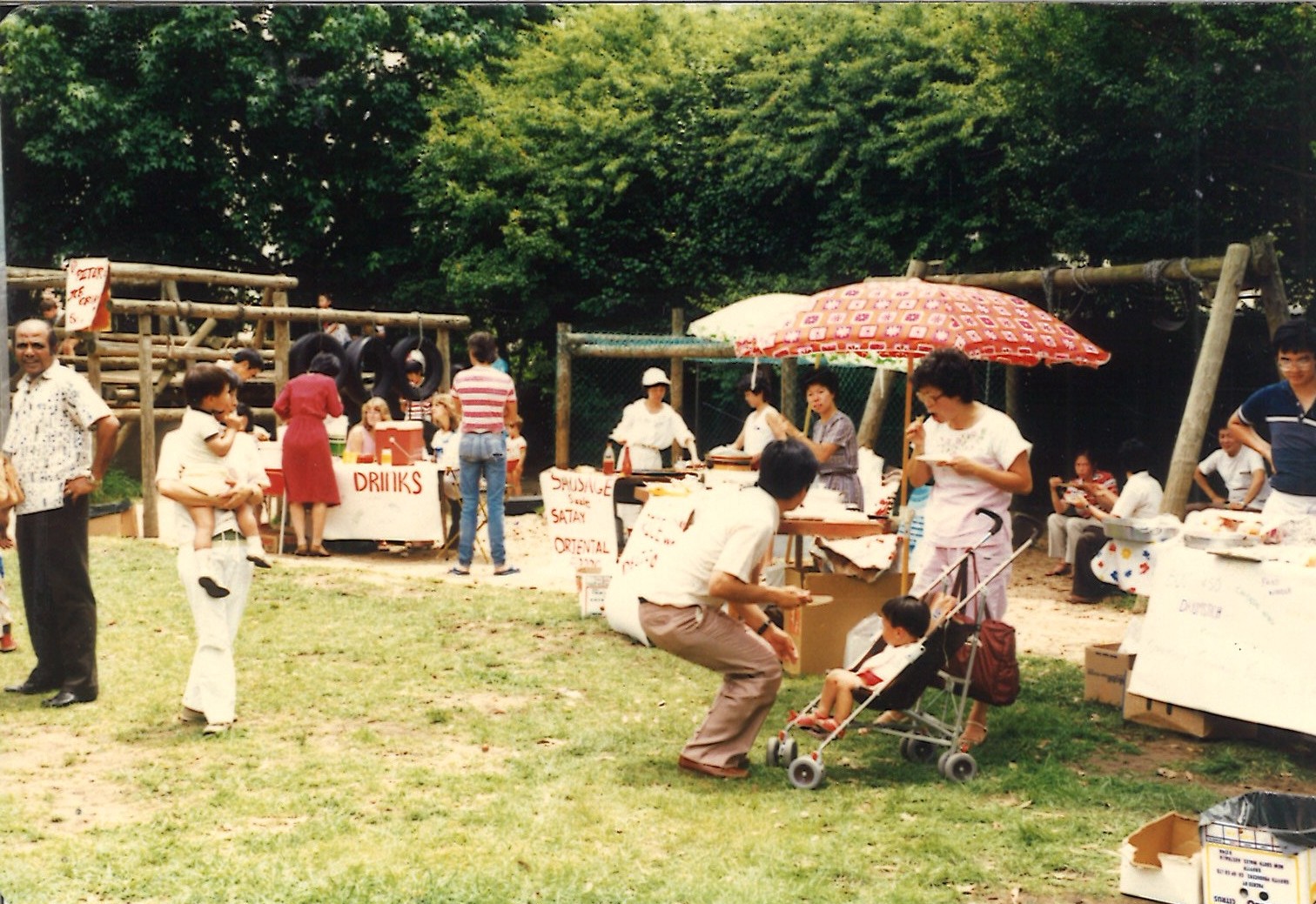
Facing enquiries from people residing all over Sydney, the Society was trying its best to meet the needs of the families. However, the system at the time did not allow cross-boundary services.

The State Government was the enforcement authority of FDC regulations.  It was supportive of the pilot FDCDS project, and it provided special approval letting Sydney Family Day Care, who was working together with our Society, to provide services outside its service boundary.

The Board felt that considering long term, there was a need to gain the support of mainstream Family Day Care agencies in different regions to accept Chinese caregivers to be able to provide services in their areas. Building relationships with mainstream FDC services was important and necessary. The Society thus applied to become a member of the NSW Family Day Care Association – the peak organization in which all mainstream FDC agencies joined.

The Board originally thought that, with the strong support of Ms. Maureen Hastings, the other FDC agencies would also be friendly and welcoming. Surprisingly, at the first meeting, the Society representatives were faced with interrogation and suspicion: “Why are you doing this project?”, “Why are you competing with our business?” and “Ask parents and caregivers to contact us directly, we do not need you!”

Representatives of our Society, Dr. Cecilia Fong, Mrs. Susie Chu and our staff members, were always patient and explained our objectives: “We are not competing with your business. We want to help Chinese families with limited English to understand the service as language and culture are barriers to accessing services.” The initial responses were very unfriendly: “Don’t be a caregiver if you don’t know English!” It was an embarrassing situation.

Our Society’s representatives did not give up. They continued to attend the meetings and kept communicating with fellow people engaged in the same trade. Ice was gradually broken. As time went on, those agencies that were initially hostile or indifferent began to understand the intention of our Society. Animosity was replaced by respect and friendship. As years went by, the people not only became friends, but also long-term working partners.

The officers of relevant departments in both the state and federal Governments dealing with child care services held meetings with our Society’s representatives bi-monthly. They found that our Society’s Board was a strong team having management capabilities, ideals and was down-to-earth.

The journey thus passed reflected an important message: when faced with difficulties, one needs to keep working hard and with time, strangers will become acquaintance, and estrangement will turn to respect.

The Society was not just providing services across boundaries in different regions; it also began to establish playgroups. Staff members had to run the playgroups, implying that the employed part-time workers had to take up full-time duties. Once again, our Society was facing challenges.

🤔How did the project go? There is more in the next article.
【007】The First Funding for CASS Service

【007】The First Funding for CASS Service

Even though there were no positive results from the Government regarding the application lodged by our Society for funding for the establishment of a Child Care Centre, the Board of Directors of our Society resolved that the founding aim of our Society, i.e. to provide child care service to the community, should still be realized even without Government’s funding assistance. In July 1982, it was resolved to provide a referral service through the telephone manned by volunteers to match parents in need of child care and caregivers wanting to provide child care service. The service was run in cooperation with Sydney Family Day Care (SFDC).

Ms. Maureen Hastings of SFDC strongly supported our service and admitted Chinese women who were interested in becoming caregivers. Our Society provided referrals when calls were received from parents looking for caregivers. During the few months’ operation, the service provided working opportunities for Chinese women with limited English to become caregivers. Chinese parents were also able to find culturally relevant child care service.

After a few months of operation, the self-organized ‘family day care’ service achieved positive results. Relevant government departments came to know about our endeavor and appreciated our initiative very much.  They were impressed. Officers from the Office of Child Care met with our Society’s representatives and encouraged us to apply for special funding to employ a worker.

In November 1982, Henry wrote a submission to the Office of Child Care, detailing the work our Society was doing and explaining that with limited resources, our work was not perfect. There was a need to employ a worker to develop the referral service and requested funding.

After 2 months of waiting, in mid-January 1983, the good news came: The Federal Government approved our funding application! It would provide a 3-year funding to our Society to enable the employment of a paid worker to develop the referral service, titled “Family Day Care Development Service” (FDCDS). The Chinese Youth League agreed kindly to continue providing office space for the implementation of the project.

Considering that employing one full-time staff member might not be the best arrangement, having to take phone calls, conduct home visits, handle administrative work and do promotion all alone, the Board decided to employ 2 part-time workers. The recruitment news disseminated in the community quickly attracted applications. After interviews, 2 workers were selected: one was a Hong Kong student who had just graduated from UNSW Social Work study; the other was a teacher migrating from Malaysia. They were our Society’s first formal employees.

In March 1983, the Society started to have two employed part-time staff members to provide service. Having human resources to take up the work, the project proceeded with good results.

At  the time, the economic environment of Australia was not good. Many people were unemployed. To lower the unemployment rate, the Government provided funding for organizations to provide jobs for the unemployed. The Board thus grasped the opportunity applying for funding. In the second half of 1983, our Society was successful in getting funding for the employment of an Office Assistant for six months, and an  unemployed migrant, a teacher from Hong Kong, was employed.

The pilot project was limited to the cooperation with SFDC service and was limited to City of Sydney area. There were many enquiries from all over Sydney. The Board realized there was a need to extend our service provision to other areas in Sydney.

🤔There were geographical boundaries for each FDC service. How could the Board resolve the issue? Stay tuned for the next article!


【006】Starting Family Day Care Service through Telephone Referrals

【006】Starting Family Day Care Service through Telephone Referrals

In March 1982, the CASS Board resolved an important position under the chairmanship of Henry, “Even without government funding, the founding aim of the Society, i.e. to provide child care service to the community, should still be realised.”

How could services be provided without funding? A group of enthusiastic and committed volunteers could be organised to take up the task. There were many such volunteers being involved in CASS.

The Board pondered on the question: What could volunteers do? What were the services that the community needed but would not require a lot of money to develop?

At that time, many young Chinese families were looking for caregivers to look after their children. However, there was not much information available, and parents did not know where to find suitable caregivers. On the other hand, many caregivers were looking for parents seeking care. CASS could provide a service to match the caregivers and the families!

The Directors understood that in Australia, caregivers looking after other people’s children had to abide by a set of Regulations. The service was called ‘Family Day Care’ (FDC). Caregivers had to be licensed to provide care legally. The government had regional agencies to manage the FDC service in the area.

The Society’s original plan was to set up a child care centre near Chinatown. Now that they had to change to FDC service, they needed to understand the different requirements. The Board thus approached Sydney Family Day Care which was managing the service in the Sydney city area. Their coordinator, Ms. Maureen Hastings, was enthusiastic and supportive of Henry’s ideas and the Society’s plan to develop service for the Chinese community. She provided the Directors with information and helped them to understand government’s requirements and regulations.

In July 1982, the Board resolved to provide a telephone referral service manned by volunteers to match parents in need of child care with caregivers wanting to provide child care service. The referral service was made possible through cooperation with Maureen Hastings.

A new question arose: where should the telephone be installed?

The Chairman of the Chinese Youth League (CYL), Mr. Peter Wong, was very supportive of the Society’s initiative to provide child care service and let the Society using their office venue free of charge to provide FDC service.

The team leapt into action. In the corner of the hall of CYL at 66A Dixon Street, Haymarket, a desk was set up and a telephone installed. The Society’s first service thus commenced operation.

The directors and volunteers promoted the service through putting up posters in Chinatown and distributing flyers. Radio 2EA (later became SBS Radio) also broadcasted the information.

As Sydney Family Day Care could only accept children and caregivers in the City of Sydney area, those residing outside the area would not be able to use the service. The original plan was to run this pilot project in the City of Sydney only.

However, when the news was released, requests for this service were received from all over Sydney. Calls from people residing around Chinatown were very few. Many Chinese were living in other areas of Sydney but went to Chinatown to buy groceries, etc. After receiving information about the child care service, many people rang our Society to enquire. The Society thus took up the role of ‘translating government policies, explaining cultural needs and facilitating communication between different parties”.

🤔Would the pilot project be acknowledged by the authorities? Stay tuned for the next article!


【005】Committed to Our Founding Aim – Serving the Community

【005】Committed to Our Founding Aim – Serving the Community

In March 1982, Sydney Chinese Child Care and Community Co-operative Society (referred to as the Society below, later became CASS) had its first anniversary. When Board members and members met at the Annual General Meeting, they faced a grim situation: the hope of getting government funding was not optimistic.

Members faced the disappointing situation with a heavy heart. Someone asked, “Without government funding, we will not be able to set up the child care service. Many ethnic communities who face similar situations have resolved to disband. Should we do the same thing to disband our Society?”

Henry reminded all those present, “Do we have to have government funding before we provide community services? Don’t forget that we have made a promise to the community that the aim of establishing our Society is to provide community services. A gentleman’s word is as good as gold!” That was true not only for those days. Even for today, the goals and challenges remain the same.

The group reviewed the journey that they had travelled over the past year: designing pamphlets, making copies, distributing pamphlets, organising activities, visiting community leaders to seek their support, etc. There was no government funding, they could still achieve something, though the services available had not been considerable. They had a sudden enlightenment: they would not want to give up so easily.

The Board thus made a decision: “The founding aim of setting up our organisation is to provide much needed services to the community. With our original aspirations, we will achieve our goals whether we have government funding or not.” This has become the unchanging conviction of our Society.

Over the past forty years, CASS has maintained its conviction. Even without funding, we still try our best to serve the community. Whenever there is a community need, CASS will use its limited resources to provide the services. It is such vision and commitment that has made CASS unique and stand out among the community organisations.

How could they provide community services? They needed to organise a group of enthusiastic and committed volunteers to take up the task.

The Australian society embraces many volunteer organisations, such as volunteer fire services, boy scouts, and the then radio 2EA (later became Special Broadcasting Services SBS) which Henry had contacts. These organisations relied on enthusiastic volunteers to carry out respective community work.

Henry was volunteering. His elder brother, Peter Pan, was also active in voluntary work, helping radio 2EA to prepare Chinese news script.

At that time, Chinese newspaper was not available. People usually distributed pamphlets through shops in Chinatown. One channel of promotion was through the Chinese broadcast of radio 2EA. The Federal government provided the venue and facilities for the radio station to broadcast in various different community languages. All programs were run by volunteers then, from broadcasters to script writers. The volunteers came from all walks of life. Henry’s brother, Peter, was a volunteer news script writer.

Peter paid visit the newsroom of the radio station every week to collect the news in English sent by various different news agencies in the world. He made copies and translated the news into Chinese. He also wrote news article about information or news related to the local Chinese community and organisations and sent to the volunteer broadcasters.

With the assistance of Peter, Henry sent information on activities of the Society through broadcast to get people to participate and help with activities.

🤔What sort of work did the volunteers of our Society do at the time? Stay tuned for the next article!

【004】Setback on Getting Government Funding

【004】Setback on Getting Government Funding

The Sydney Chinese Child Care and Community Co-operative Society (later became CASS) was formally established on 8 March 1981 at the Surry Hills Neighbourhood Centre. 9 members were elected to form the Board of Directors, with Henry as the Chairperson.

It was already 3 months since the submission of the funding application to the Federal and State Governments, and nothing was heard from the authorities. Henry did phone the authorities to enquire about the progress of the submission, and the reply was, “The submission was well written. It is still under consideration.”

Everyone was very anxious. Henry further contacted the organisation that had helped with the submission earlier, the Ethnic Child Care Development Unit, to try to find out more about why there was a lack of feedback from the authorities.

In early 1980s, the domestic economy of Australia was in poor conditions, and the Federal Government was reducing expenditure on welfare. Meanwhile, due to the short history of the Society, the Government lacked confidence in the group’s management ability to administer funding.

It was thus necessary for the Society to prove to the Government that it had influence in the Chinese community to gain the trust of the authorities. Henry and Board Members took action to organise events to assist the Project.

Many Board Members had experience organising activities during their university days. They decided to organise celebrations during traditional festivals. On the one hand, they could prove to the Government that the Society had the ability to organise activities. On the other hand, they could collect fees to raise revenue for the running costs of the Society.

Enthusiastic Board Members and volunteers worked together to plan the activities. There were no Chinese newspapers at the time. The main channel for promotion was distribution of flyers or through words of mouth. The Chinese Youth League of Australia (CYL) provided a much needed helping hand at the time, helping with typing and printing the flyers.

Some Board Members and volunteers prepared food at home and brought them to the venue. Some volunteers planned and performed the singing and dancing acts. The Lunar New Year celebration was full of excitement with over 200 people attending the event. It also raised around $200 to $300, and the result was encouraging.

At the same time, Henry also took on an important task. He paid visits to leaders of various Chinese organisations, seeking their consent to sign a Support Letter. Through friends of some Board Members, they managed to contact a number of leaders of established Chinese organisations, including Hainanese Association of NSW Inc., Chung San Society of Australia, the Chinese Masonic Society and the Chinese Youth League of Australia. Henry and Board Members met those leaders and put forward the intentions of the Society. Most leaders were very supportive of the establishment of a child care service, however, there were a few organisations not rendering support.

By March 1982, A year had passed and there was no news on government funding. The situation was not optimistic. At the Board meeting, members were faced with a serious question: there seemed no hope for getting government funding!

Should the Society be disbanded? Or should they continue to pursue their original goal? What is the path ahead? Stay tune for the next article.

【003】Establishing the Sydney Chinese Child Care and Community Co-operative Society

【003】Establishing the Sydney Chinese Child Care and Community Co-operative Society

Many hands make light work. In March 1980, Henry invited several like-minded friends to join the Preparation Committee of the proposed project. Together they shared ideas on how to get government funding to establish a culturally appropriate child care centre for the Chinese community.

The Project received wide support from many people in the community, and many joined as volunteers. The Preparation Committee and the volunteers carried out 2 separate and different surveys in Surry Hills where there was a high concentration of Chinese residents and low paid female workers. After these initial surveys were completed, the Committee felt there was a need to have data showing the Project was widely supported by the Chinese community. They thus carried out the third survey.

There was neither internet nor Chinese newspapers at that time. It was not an easy task collecting data from Chinese migrants living in different suburbs in Sydney. After intensive discussion, it was decided to conduct telephone interviews of randomly chosen people as most Chinese families had telephones.

Henry went through the “White Pages”, a phone book which was distributed to every household, and gathered the phone numbers of listed people with common Chinese surnames. He found about 5000 numbers.

He then listed the phone numbers according to the alphabetical order of the surnames. He used a computer program to generate numbers randomly for the selection of 150 phone numbers. He gave 15 phone numbers each to 10 Committee members and volunteers, who had to interview the families through the phone, asking them 6 to 7 questions to collect their views and suggestions.

After the collection of data, analysis of the data was carried out by Henry and the results were incorporated in the submission being prepared. While the Preparation Committee was pondering who was the best person to write the submission, henry met an English-speaking friend from his university days at UNSW, Vivienne Teoh. She was doing her PhD study and was conversant with writing thesis, as such, she would be the best person to write the submission. When Henry approached her for help, she agreed without second thoughts.

Vivienne worked on the submission from August to November 1980. Henry gave a lot of suggestions and ideas. After to and thro discussions, the report was done and submitted to both the Federal and the State Governments on 1 December 1980, requesting for funding to set up a child care centre.

Another huge task faced by the Preparation Committee was: to manage government funding, a legally incorporated organisation must be formed to handle the matter.

From December to March the following year, the Preparation Committee was busy working on setting up an organisation. The Associations Incorporation Act was not in existent in Australia at the time. To become a legally registered organisation, the choice was either registering as a company or a cooperative society. The Preparation Committee chose to establish a cooperative society and the organisation name was ‘Sydney Chinese Child Care and Community Co-operative Society’. With the decision, committee members worked on recruiting members for the proposed organisation.

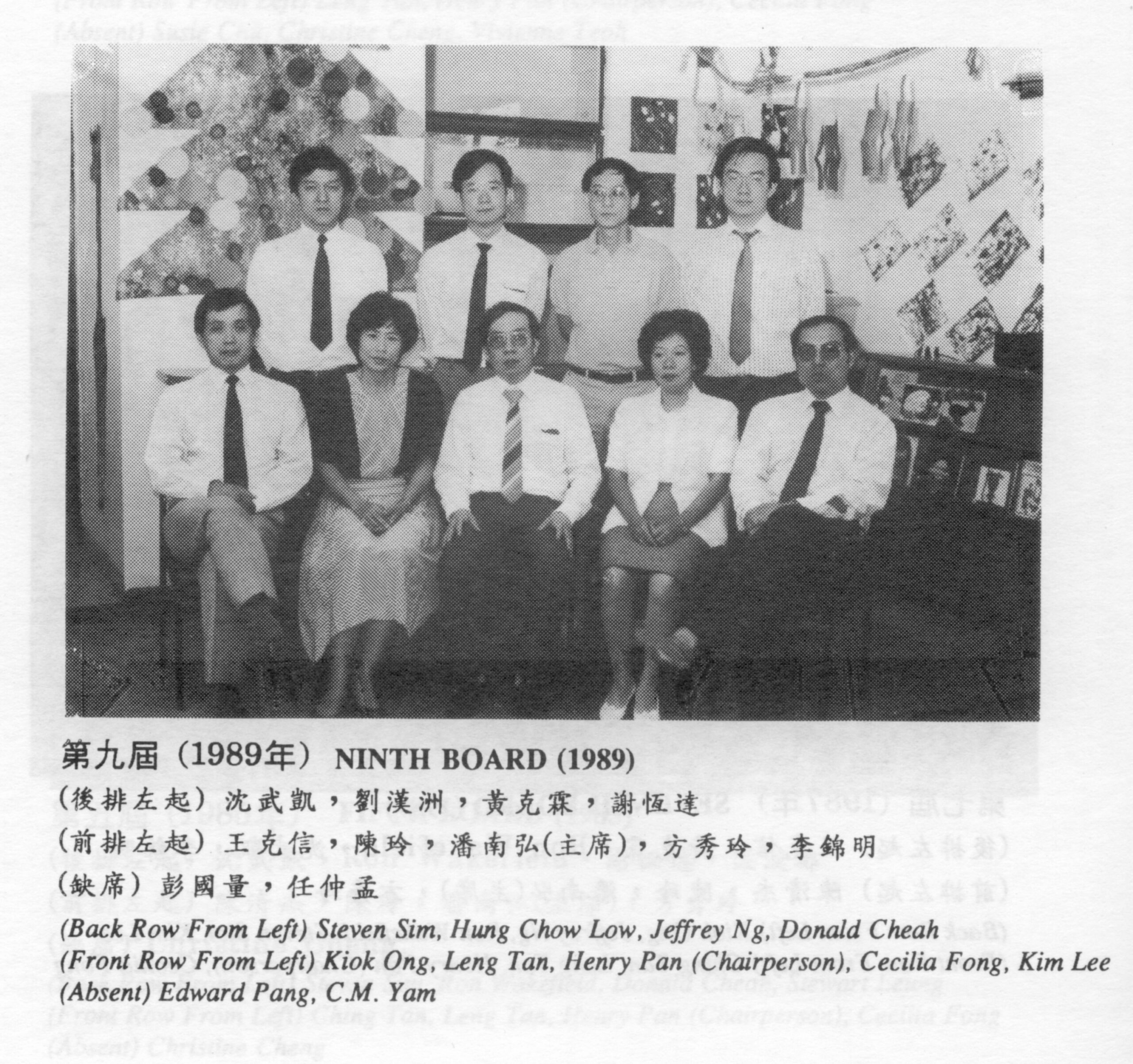
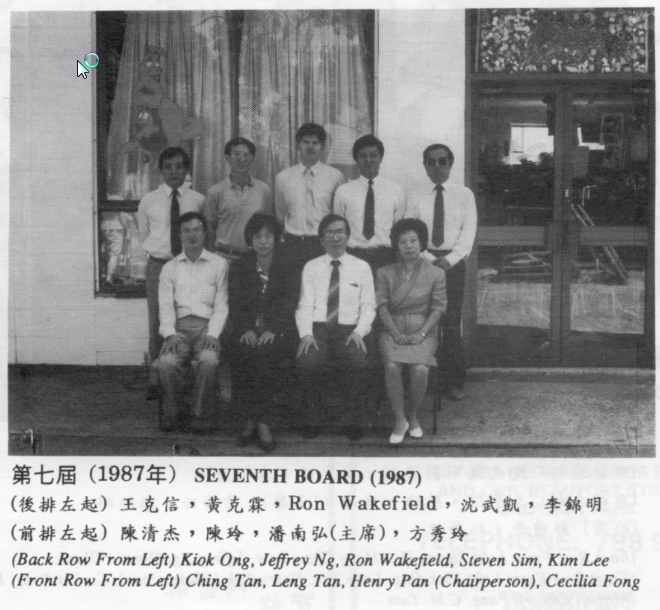
Sydney Chinese Child Care and Community Co-operative Society was formally established on 8 March 1981. The Formation Meeting was held at the Surry Hills Neighbourhood Centre in which approximately 70 people attended. Members of the First Board were elected, and they included: Mr Henry Pan, Mr Ching Tan, Dr Leng Tan, Dr Cecilia Fong, Ms Patricia Wong, Dr Vivienne Teoh, Mrs Susie Chu, Mrs Hilda Lee and Mr Steven Sim. Henry was elected as the Chairman, with Ching Tan as the Secretary.

Was the funding application successful? Stay tuned for the next article!