
With the abolition of the White Australia Policy in the early 1970s, Australia began to implement the Multiculturalism Policy. The founding of CASS was made possible by a group of passionate people contributing their efforts to meet the social needs of the community. They raised concerns about issues affecting the rights and benefits of the community. As such, they had close ties and constant communication with the community.
Multiculturalism was often met with resistance. In March 1984, a famous Australian historian Professor Geoffrey Blainey had repeatedly expressed his opposition to multicultural policy at important meetings, voicing his concerns that it would damage the country and affect the benefits of majority Australians. John Howard, who was a federal member of parliament at the time and later became Prime Minister, openly supported the views of Professor Blainey and fortified anti-Asian remarks.
Facing political development that would affect the rights and equity of the Asian communities, the Board of our Society believed there was a need to raise awareness and concerns in the community and respond. In March 1985, the Board held a seminar at the Campsie Child Care Centre to discuss the viewpoints of Professor Blainey and Mr. Howard and explore the reasons of their concerns and impacts. Over 20 community members attended the seminar, and a record of the discussion was submitted to relevant government departments.
On the other hand, things began to settle down after the Union visit in August 1985. The Board of our Society began its work to solve the financial target of raising $40,000 for the purchase of No. 48 property.
There was suggestion to hold a fete to raise funds. Board members leapt into action. They started promoting the activity in earnest: printing flyers, placing advertisements in newspapers, promoting them on 2EA radio, and volunteers distributing flyers in the streets.
The community responded well in donating goods for garage sale. After learning that the fete was to raise funds for the child care centre, community members and members of the Society showed their interest in the future of the next generation. They were enthusiastic about donating toys, clothes and reusable household items. Some even donated whole boxes of goods. Many others joined as volunteers to help in the work of organising the fete.
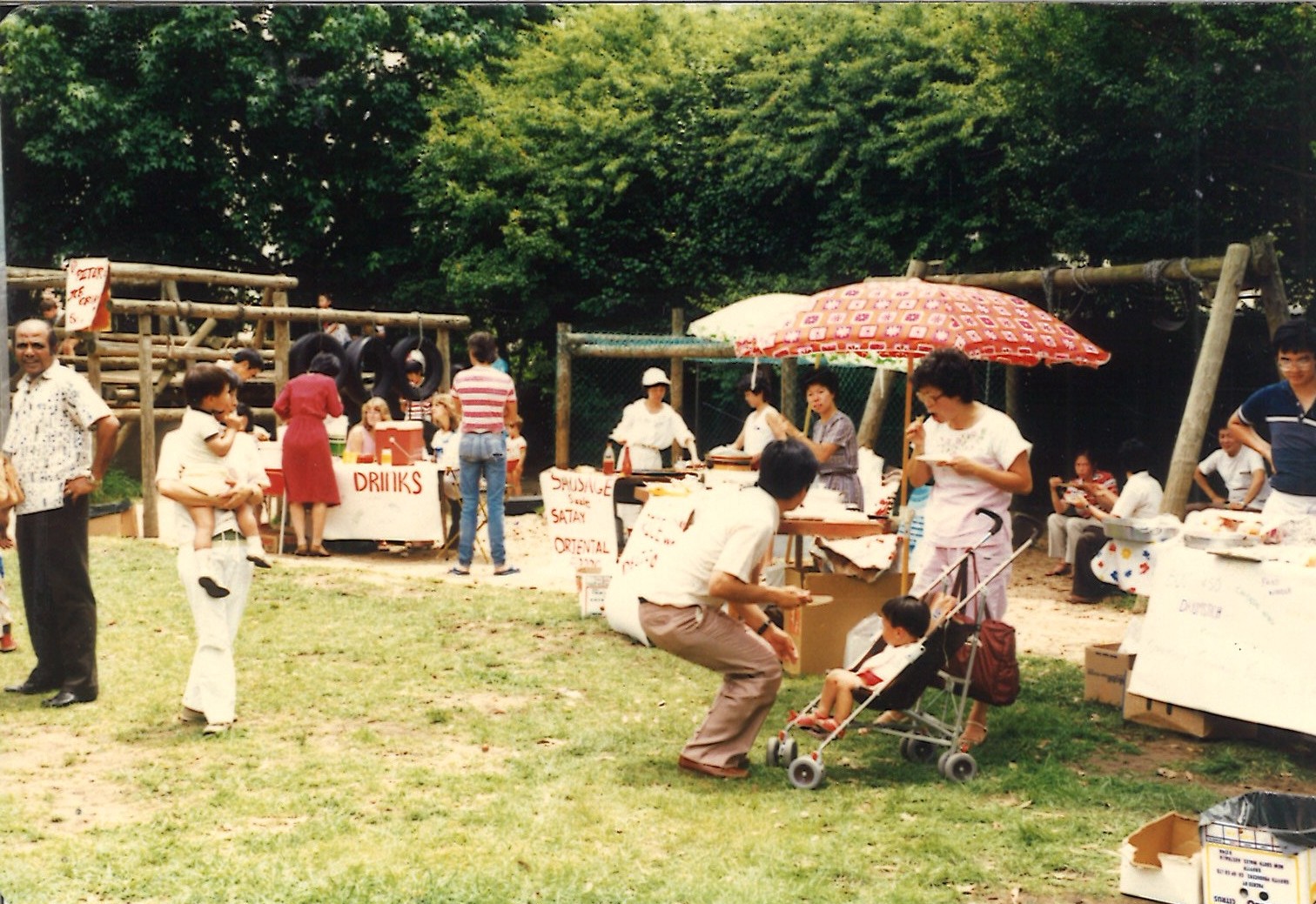
On Saturday 7 December, the fete was held at the child care centre. Life was simple and frugal at the time. When people heard there were goods to be sold cheaply, residents from the neighborhood came to have a look.

The day was filled with crowds and multiculturalism was showcased. People crowded in front of the stores selling secondhand clothes, sundries and toys. The food stalls were the most popular. From homemade Asian delicacies to Australian barbeque sausages and ice-cream, people were lining in queues. Families also enjoyed children’s crafts, games and lucky draw.
Witnessing the joyous atmosphere and the success of the fete, people in the neighborhood were impressed by the capability of the Society and its connection with the community.
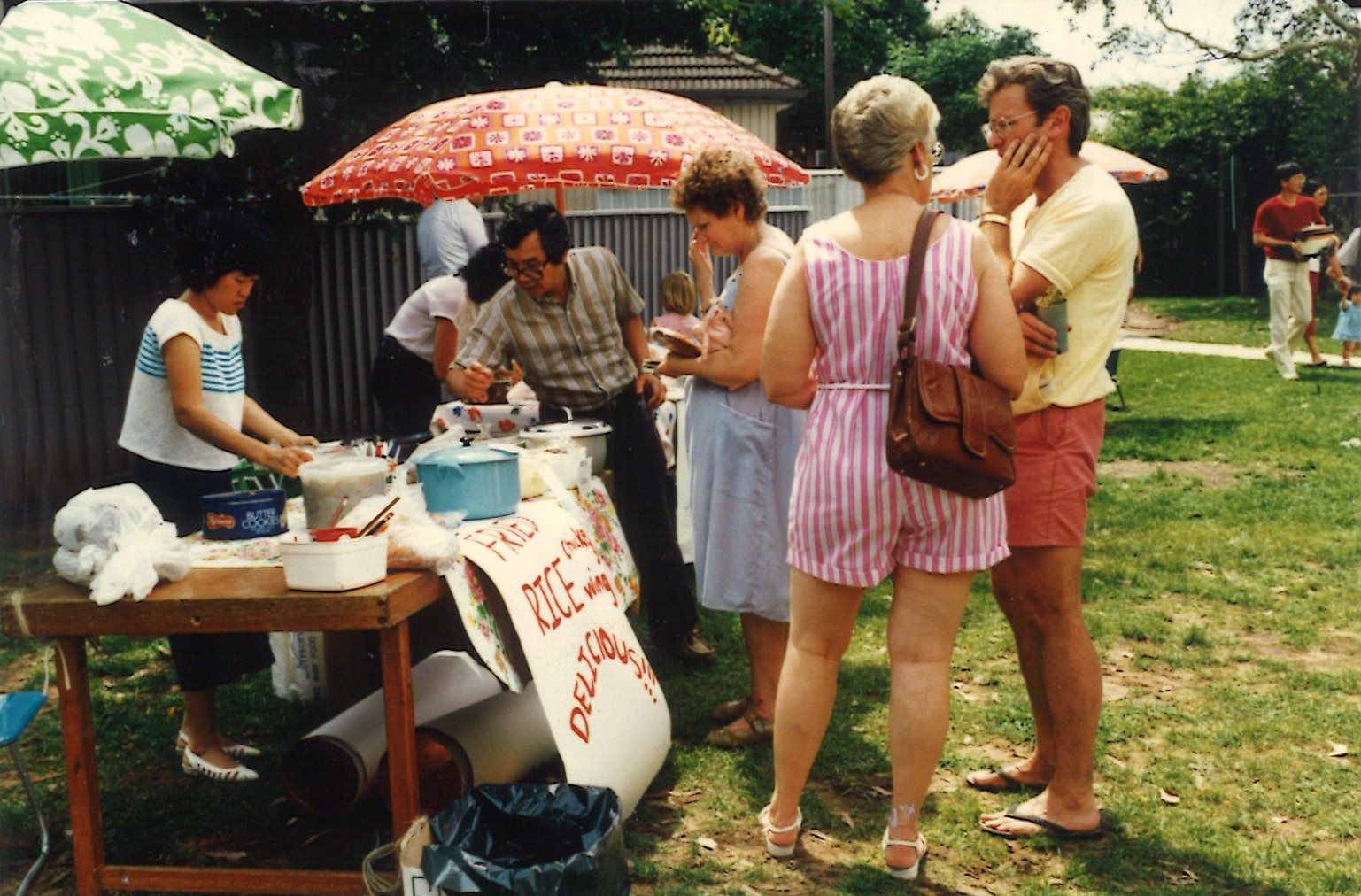
The sale of secondhand clothing, sundries, toys, food and raffles delivered good results. After a hard day’s work, the organizers realized that over $4,000 was raised. It managed to raise enough funds to pay for the 10% deposit and the legal fees connected with the purchase of the No. 48 property. It was one of the most successful fundraising activities in the history of CASS.
🤔Was this a turning point in the development of the Society? There’s more to share in the next article.
