The Resilient Gardener

The Resilient Gardener

The Resilient Gardener

Henry Pan – a man without sight yet full of vision

On 8 January 2006, the Foundation Chairperson of CASS, Henry Pan, was attacked while helping a disadvantaged member in her home. Without warning, a thug violently attacked Henry and, in less than a minute, blinded him. Ever since he has been living in a world of darkness.

Many people were horrified at this tragic misfortune and bewailed Henry’s loss of sight. Many offered their help. But not everyone. A small group within the management of CASS asked, “Can a disabled man lead CASS to its next stage, building on our last 25 years?” Some began to spread rumours about Henry’s capability, using this chance to rob him of his Chairperson role. He was devastated, both physically and emotionally, by this treatment.

Some people would continue to blame fate for its merciless blow. Facing the brutal reality of the greatest challenge of his life, Henry stood firm, sustained by unflinching willpower. He may have lost his sight, but he used his ears, his heart and his brain to make sense of his new dark environment. He used special software to control the keyboard to access his computer, typed, sent emails and listened to news on the Internet, just like everyone else.

For Henry, a further challenge was resolving the internal conflicts within CASS. He was heartened that people rallied around him, with a group of CASS and other community members organising a gathering, Community Spirit of Henry Pan, with over 500 people attending to celebrate his achievements and contributions.

Afterwards, Australian government officials and successive Chinese

Ambassadors and Consul-Generals conveyed their warmest concern.

The Australian Council of Chinese Organisations presented him with

an award in recognition of his achievements. In 2007, at a Lunar

New Year function, he was presented with the Quong Tart Lifetime

Achievement Award in Community Service by the then NSW Premier

Morris Iemma.

In December 2007, the persistence of Henry and loyal CASS members finally paid off. A new Board was elected at the Annual General Meeting. While Henry had no wish to take the Chairperson position again, he continued to offer his skills, talents, vast experience and expert knowledge as a volunteer, to help the organisation further its development. With Leng Tan, Peng Bai, Bo Zhou, Dominic Sin, Peter Fong, Louise Wu, Tao Bai and Chuck Hong working as a team, CASS recovered gradually.

Henry’s soul glows. He often has his wonderful wife by his side, lovingly taking care of him. Mrs Pan takes Henry to work and quietly supports him. Together, the couple has contributed to CASS for as long as it has operated. CASS has become their second home. Seeing Henry and his wife holding hands as they walk through the gate of CASS, people are touched by the serenity of the couple and their sacrifice.

Henry’s work takes no account of day and night: he simply keeps going. He has high expectations for CASS. It is not uncommon for colleagues to receive emails from him in the middle of the night. While everyone else is enjoying a good night’s sleep, Henry is still working.  He wants to use every minute. While he has a huge workload, he is highly efficient, causing people around him to forget his disability. He never asks for remuneration; instead, he pays for his lunch and never claims for transport expenses. He even pays his own phone bill.

Henry says he lives a simple life with few needs. While people describe him as the architect of CASS, he counters that he considers himself a hard-working gardener. He is now surrounded by admirers and supporters and has worked with this team to formulate a blueprint for the development of CASS for the next decade.

Henry might lack sight, but he is a visionary. He is relentless in his pursuit of his goals, aided by his intellect and wisdom, his exceptional memory, his extensive knowledge, his unwavering persistence, and his positive attitude towards life. He will not be beaten by tragedy brought by fate, and never stops believing in the value and meaning of what he is doing. He fights against all odds and battles upstream.

Those around him are in awe of his indomitable spirit. He is indeed a great role model, for all at CASS, his children and grandchildren and the community.

The concerted efforts of CASS leaders have paid off. Like a beautiful garden, CASS is flourishing, full of colour and vitality.

Originally published in January 2011

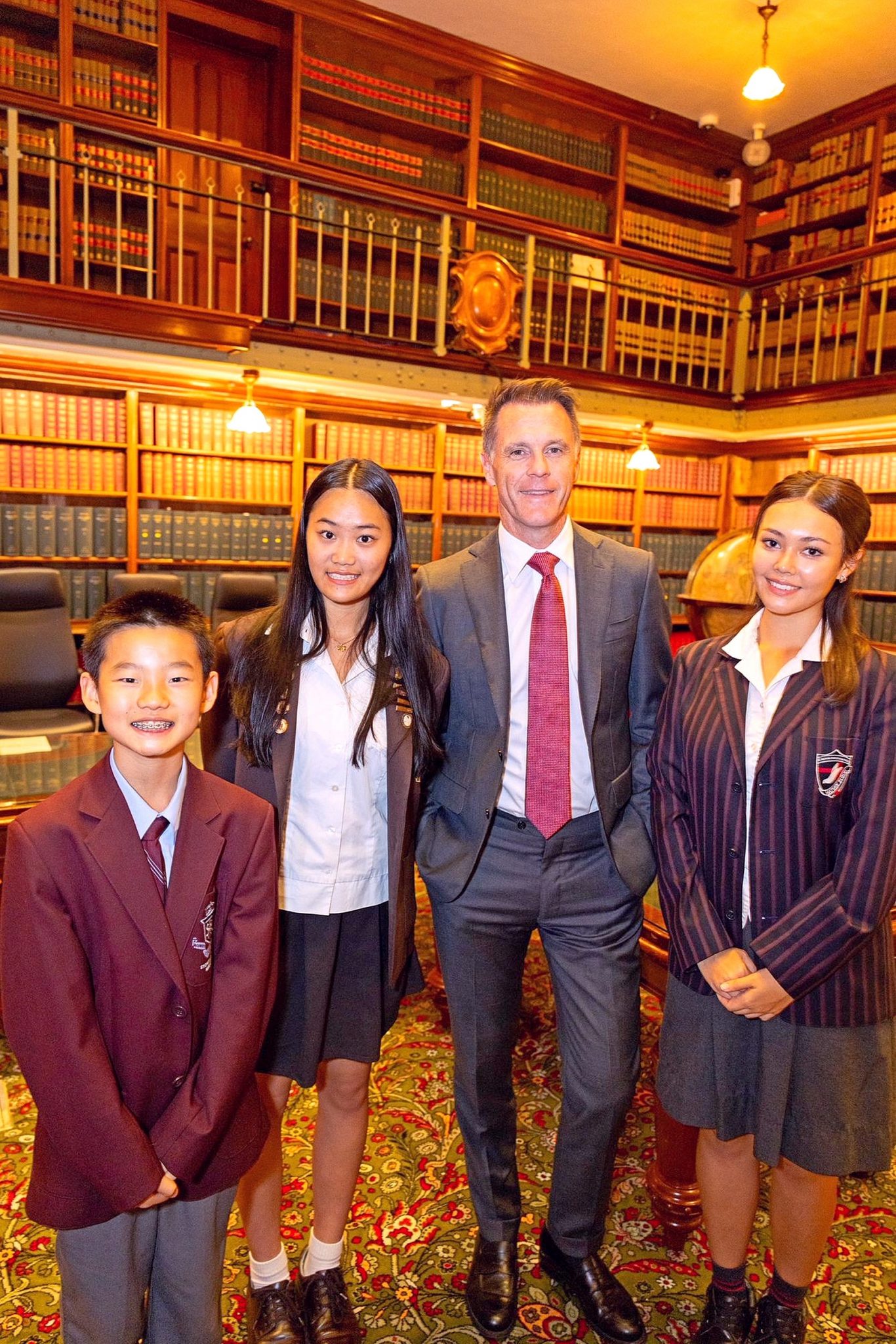
Former NSW Premier Morris Iemma presenting the Quong Tart Lifetime Achievement Award in Community Service to Henry Pan, accompanied by his wife, in 2007

Daffodil Day

Daffodil Day

Daffodil Day

Chinese volunteers joining forces with the local community to help a good cause

People of Chinese background have a special love of daffodils. These golden flowers are often part of annual Lunar New Year celebrations. During that special time, people tie a red ribbon around a pot of daffodils and add a red hui chun note with the message: Good fortune arrives as flowers bloom. Daffodils, flowering early in the season, are believed to bring luck and peace, new life and hope.

Bright yellow “Western” daffodils are different from those grown in China. In Australia in August, as spring begins and the flowers bloom, the Cancer Council organises its fundraising Daffodil Day.  Flowers and souvenirs are sold to raise funds for this worthy cause.  This is an activity widely supported by the Australian community.  Volunteers can be seen all over the country selling fresh daffodils  in public places, and businesses such as supermarkets and petrol stations join in.

CASS has been supporting Daffodil Day for many years. Souvenirs are displayed and sold at our Head Office and among our different Activity Groups. In 2012, eight of our volunteers joined forces with others to sell flowers at Hurstville Station, contributing their time and energy to this good cause.

By seven in the morning, four CASS volunteers had already arrived at the station to join other dedicated volunteers. Stationery and teddy bears were also on offer, but the star was of course the bunches of fresh daffodils.

Most of our volunteers were seniors, but their work was just as productive as that of younger volunteers. Many Chinese Australians use the station and our volunteers could communicate easily with them in fluent Cantonese or Mandarin. When greeting travellers, they charmed them with lovely smiles and Good Morning in their first language. They were able to explain to potential customers the meaning and benefits of what they were doing. And their hard work paid off.

The meaning of volunteers’ involvement cannot simply be measured by sales. There was a palpable sense of pride among our volunteers. One volunteer spoke of how thankful she was for the opportunity to give back to the community. She had come to Australia from Hong Kong only three years ago. When she first arrived, she had felt lonely and isolated because of not being fluent in English, so unable to understand what was happening around her. Every day when family members went to work or school, she was left alone.

By chance, she attended one of CASS Activity Group meetings, and her life began to change. She met new friends and her social network expanded. Talks organised by the Group gave her information on health, and revealed how she could become involved in community activities. Her life has now become much more fulfilling. On Daffodil Day, she was so excited she got up at six in the morning and was the first volunteer to arrive at the station. After a hard morning’s work, she was exhausted, but also flushed with pride, elated because she at last felt genuinely part of the Australian community.

Now she is no longer isolated. She is a true Australian citizen, working hand in hand with others to make a valuable contribution to health in her new country.

Next August, when the daffodils bloom again, we hope many other members of the Chinese Australian community will come out and help support this vital cause.

Originally published in September 2012

CASS volunteers selling daffodils at Hurstville Station

Elderly Parents In A New Country

Elderly Parents In A New Country

Elderly Parents In A New Country

Some food for thought

Chinese Australian grandparents playing with their grandchildren in parks, shopping malls and libraries are a familiar sight in Australia. Many who witness this admire their devotion.

Filial piety is one of the most important values in Chinese culture. But when they bring their parents to Australia, young people need to consider their welfare and wellbeing. In many cases, young couples migrate to Australia first, and after they are settled, apply for their parents to join them through family reunion. When planning how they will adjust, they need to consider their needs and ensure their parents’ dream of having a wonderful life with their family in the new country can be realised.

Many Chinese grandparents in Australia are not as happy as they should be. They feel lonely and helpless. CASS Settlement Services workers explain why. “We have a lot of old friends coming to us to air their grievances. Some seek help in applying for welfare benefits or public housing, while others simply want someone to listen to their woes.”

There are many reasons for bringing elderly parents to Australia. Some couples need the help of their parents to look after their young children while they work, while others do not want to leave their parents alone in China as they age. But often couples have arranged for their parents to join them without thinking about the long-term consequences. Many elderly parents have to sell all their assets in China in order to fund the move to Australia. When they arrive, they are often called upon to help provide the deposit for their children’s first property, in which the three generations can live together.

“The idea of having the generations living together under one roof is a dream for many Chinese,” say CASS workers. But different habits and sharing a small space can often create conflicts. Financial stress adds to the tension of grandchildren growing up and competing for space. When grandchildren need more space and privacy, grandparents might be asked to sleep in the living room.

Health issues also affect ageing grandparents. Sometimes they are asked to rent their own place and solve their own financial problems. Even if they agree to apply for public housing, this process can take three, five or even ten years. Many Chinese seniors do not understandor speak English, and find it difficult to go to new places or seek help from local organisations. Such factors can lead to the deterioration of relationships between the generations.

CASS Settlement Services workers lament that when the young couples need the help of healthy parents, they advocate family love, yet when their own children have grown up and their parents are ill and weak, they begin to speak of the independence of the elderly. Their parents have suddenly become baggage.

Once their children become adults, seniors in Australia have already started planning for their retirement. After they have paid off the mortgages on their homes, those with means organise medical and funeral insurance. They travel and enjoy life after work. If their health deteriorates, they sell their home and move into an aged care facility. Those with financial difficulties would have applied long ago for public housing and live on a government pension after retirement.

Our workers advise: “Before young people apply for their elderly parents to join them in Australia, they need to carefully consider and discuss the long-term consequences. Will they be financially vulnerable? Will the pension they receive from the home country be able to sustain them here in Australia? Will they be able to adjust to the new environment, especially when they have limited English?

Can the young couple afford to provide for their parents in the long term, for example by providing a separate place to live? They need to make sure their elderly parents can adapt to the new environment and enjoy their new life here, instead of the whole family suffering together when problems arise.”

Originally published in June 2014

Chinese migrants need to plan carefully in order to enjoy a happy life when three

generations begin to live together.

Listening To The Young

Listening To The Young

Listening To The Young

A conversation with young Chinese Australians

Steven was only nine when he came to Australia from China. Since he was not fluent in English, he often found himself isolated at school and had a difficult time there. Lost and downhearted, he could not understand why his parents had brought the whole family to this land where communication was difficult and everything seemed strange.

As Steven grew up, however, he began to understand why his parents had made such great sacrifices to come here. He could see that they had given up their friends and familiar environment to start a new life in Australia. But they found it hard to get jobs of comparable status to their Chinese ones, and they missed the support of friends and relatives. They became stressed. But they soldiered on. They had made their choice for their son’s sake.

By the time he was 20, Steven was helping out at CASS Disability Services, in the Group Home. He showed loving care to the clients, and enthusiasm and passion for the work of CASS. His voluntary work was undertaken over and above his day job.

A group of young Chinese Australians with similar backgrounds offer their thoughts about their parents’ migration. They all understand their mothers and fathers had overcome difficulties and made many sacrifices to settle in the new country. They knew that their parents’ dream was that their children would grow up in a stable environment and go on to have secure and affluent lives.

These young Chinese would rather speak English than their mother tongue. But it is touching to find that they have not forgotten the teachings passed on by their parents. Nor have they forgotten traditional Chinese values. They are proud of their Chinese roots. They work hard and have already achieved educational success.

This is undoubtedly the result of the two generations supporting one another. One of them commented, “We are proud to be the descendants of Chinese migrants because they have made such a great contribution to Australia – right back to the old days. They quietly took up jobs no locals were willing to do. The early Chinese migrants should take a lot of credit for what Australia has become today.”

It must certainly be gratifying to their parents to know that their sons and daughters understand and appreciate the sacrifices of their forebears.

However, because they have grown up in Australia, the younger generation may not always share the same views as their parents.  Many want their children to choose professions that lead to a secure future, such as accounting, medicine or finance. They also often hope to share a home with their grown-up children. But young Australians value personal freedom and choice as well as wanting to choose careers which they enjoy and give them opportunities to develop their talents. They also want to move out of the family home and be independent. Such views are often not welcomed or understood by their parents.

They need to realise that the world has changed, and that there are cultural differences between China and Australia. The two generations have grown up in different decades and in different cultural environments, so naturally they have different values. While most young people respect the views and honour the wishes of their parents, they are inspired by a different set of beliefs. While acknowledging their roots, sons and daughters embrace Australian values in this multicultural society. Only with them as a guide can people from different cultures live together harmoniously.

As a way to show gratitude towards both his parents’ generation and Australian society, the young CASS volunteer wants to make a contribution. We at CASS wish that every Chinese Australian will continue to strive towards interweaving Chinese culture and Australian values, to produce something worth passing on from generation to generation.

Originally published in December 2012

Young CASS volunteers contribute to society by assisting the disadvantaged.

Seniors And Children Together

Seniors And Children Together

Seniors And Children Together

CASS Residential Aged Care Facility winning an architectural award

“Intergenerational programs” and “intergenerational living” have recently become popular concepts in aged care provision. Intergenerational living communities have emerged in countries such as the United States and Germany where the population is rapidly ageing. By offering seniors opportunities to interact with younger generations, they reignite their joy in life. Children learn how to relate to, and care for seniors.

There is something special about the location of the CASS Residential Aged Care Facility (RACF) in Campsie. From the outside, visitors can appreciate the modern design of the building and the abundant plants in the garden. Looking out from a balcony, residents can see the CASS Campsie Child Care Centre next door, full of children laughing as they play. Nearby, the CASS Activity Hall is crowded with middle aged people meeting and doing what they enjoy. The happy sounds of their voices float up.

Three different services for three different generations are so close that participants can see what is happening next door. Although there are safety fences between the areas, it is clear at all times what is happening in each. When RACF residents relax at their windows, on their balconies or in the gardens, they can see and hear everything.

The CASS RACF won the 2015 Urban Development Institute of Australia NSW Award for Excellence. The Foundation Chairperson and Honorary Executive Director of CASS, Mr Henry Pan, commented, “We had intergenerational interactions in mind when we were planning the construction of the RACF. While CASS has been providing aged care services over the years, apart from adhering to Australian guidelines and regulations, we have always paid attention to new concepts and developments in the industry. When we found innovative ideas or experiences from other countries that would benefit our seniors, we would try to integrate them into our services.”

“The design of our RACF also has connections with our cultural roots. In Chinese culture, intergenerational living is common and is a symbol of happiness and wellbeing. When people of different generations live together, seniors can find a smile every day and experience constant from younger people. Children and young people can learn from seniors’ experience and wisdom, while at the same time learning to understand the difficulties they experience in their daily lives. They can understand the traditional Chinese value of filial piety as they look after their seniors.”

“In our service provision for seniors, we have gained understanding of their needs. Before the building of the RACF, we had run activities for them in the Activity Hall while providing day care services in the Campsie Child Care Centre. We saw how the seniors’ faces lit up when they saw children playing. So we have regularly organised joint activities for seniors and children to enhance their interactions.”

“Since intergenerational programs have been well received by both groups, we decided to implement that model when we designed the RACF. We were not aware then that many recent studies in aged care services had also pointed a similar way.”

“The experience of CASS shows that when we watch and listen to seniors while caring for their needs, we will understand them better and be able to provide the best services.”

Watching children and seniors interacting at CASS is heart-warming and comforting. The seniors who receive such loving care in the RACF are truly blessed.

Originally published in March 2018

Interaction of seniors and children at Campsie Child Care Centre

When In Australia, Do As The Aussies Do

When In Australia, Do As The Aussies Do

When In Australia, Do As The Aussies Do

Learn the social etiquete and be a read Australian

It has been suggested that a community organisation like CASS could arrange a course for new migrants to teach them the customs and manners of Australia. This is a good idea, since Australian community workers and volunteers sometimes find the behaviour of the Chinese community difficult to understand. Timely advice could prevent misunderstandings based on ignorance or cultural differences. Other unacceptable behaviours may be the result of bad habits accumulated over time which could be changed through better understanding ofsocial etiquette in the new country.

When CASS originally collaborated with Australian community organisations, they would often offer tea and refreshments to all participants. The expectation was that everyone would share what was on offer. Now Chinese organisations often decline to provide English tea during activities, saying that Chinese prefer Chinese tea. The truth is more embarrassing. When milk was provided for adding to English tea, some Chinese would instead pour themselves whole cups, leaving others with none. To avoid this situation, CASS has stopped providing milk.

On occasions when refreshments were served, those at the front of the queue would pile their plates. By the time the end of the queue was reached, there was no food left. In Australia, light refreshments are considered a form of morning or afternoon tea, not providing for a full meal. However, some participants were not only eating as a meal- they were resorting to “takeaway” as well.

Many years ago, we witnessed the unfortunate scene of a group of seniors fighting over food. After a community safety talk organised by a Council, refreshments were provided. Instead of queueing to get food, participants pushed and shoved, overturning plates and spilling food everywhere. Organisers were helpless. The Council had to call in their cleaning staff with vacuum cleaners and other equipment to tidy up the venue. After that incident, food is now distributed to individuals by volunteers whenever an activity group organises parties or functions.

Another problem faced by community organisations is getting audiences to pay attention during official ceremonies. No matter who the VIPs are, people continue talking when the guests are speaking. Many people who have attended activities organised by Chinese organisations describe this is a continuing problem which does not fit well with normal practice here. During official ceremonies, it is important to show respect for honoured guests by listening to what they have to say.

As migrants, we know that in most Chinese cities, homes are small, making it difficult to invite family and friends in groups. People generally gather at restaurants to network, and have a habit of talking loudly and freely in public places as the surroundings are noisy. People in Australia, however, value privacy, and believe that it is important to minimise disturbance to others while at public venues.

A CASS worker remembers how, at a consultation aimed at improving community life, an Australian attendant expressed her displeasure in seeing people spitting in public places, and some elderly people letting their small grandchildren urinate in the street. Both are unhygienic practices. The worker felt so embarrassed she wished there was somewhere to hide.

Originally published in May 2011

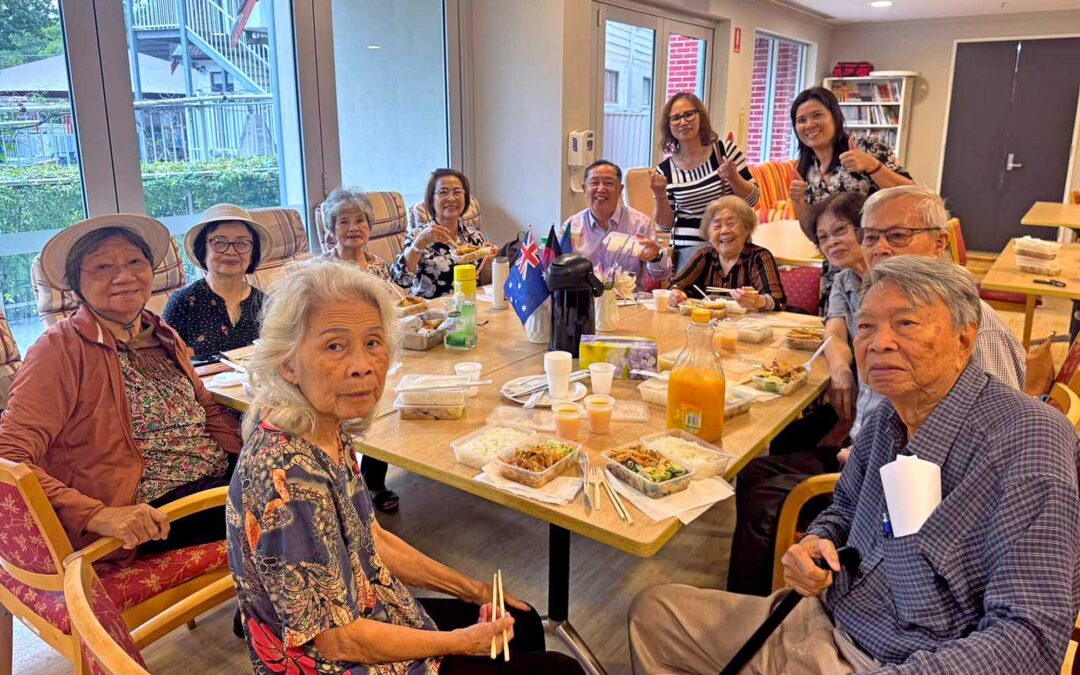
It is common practice for Aussies to have refreshments at the end of a function to facilitate networking among participants