
Even after settling in Australia, the vibrant celebrations of Lunar New Year remain a cherished touchstone for many Asian migrants. Across Australia’s multicultural communities, distinctive festive events are held each year, inviting people from all backgrounds to participate, share cultural traditions, and experience the rich spirit of the season.
This year, the “Spring Arrives with the Horse - 2026 Lunar New Year Fair”, hosted by the Inner West Council and organised by CASS, was held on the afternoon of the first day of the Lunar New Year at Ashfield Town Hall. I joined Robin, from Community Social Support Services unit, for a tour of the festival grounds.
From the moment visitors entered the venue, they were greeted by festive backdrops and photo installations brimming with New Year symbolism. Families and friends eagerly posed for photographs, capturing joyful moments and sharing the festive cheer with loved ones across Australia and overseas.
With an infectious smile, Robin explained:
“CASS has organised Lunar New Year celebrations for many years, but this year's garden festival offers something particularly distinctive. Alongside a vibrant cultural performance program, we've incorporated traditional games such as ring toss, traditional pitch-pot, and traditional face decoration experiences, ensuring visitors of all ages can immerse themselves in the festivities.”
Pointing towards the two busiest corners of the hall, she added: “These are undoubtedly this year’s star attractions.”
Following her gesture, I saw a long queue forming at the ring toss station. Adults and children alike were eager to test their luck and skill. A young girl, no more than seven or eight years old, stood on tiptoe and carefully released her ring. The moment it landed perfectly around her chosen prize, the crowd erupted in applause. Clutching her reward, she grinned from ear to ear.
“This little girl has lined up three times already, and she finally won the prize she wanted,” Robin said with a smile. “Ring toss may look easy, but it actually requires remarkable hand-eye coordination. We've carefully selected prizes that symbolise swift success traditionally (instant success upon the horse’s arrival), making the achievement even more meaningful.”
We then moved on to the traditional pitch-pot station. “This is where the real competitors gather,” Robin said enthusiastically.
Originating in ancient China, pitch-pot was a popular pastime among scholars and officials at banquets and social gatherings. The game is closely associated with the traditional archery component of the ancient “Six Arts” expected of a cultivated gentleman.
“Many people have only seen it in historical dramas and have never had the opportunity to play it themselves. By bringing the game into a contemporary community setting, we're giving people a chance to engage with traditional culture in a fun and hands-on way. Even younger participants can't resist the challenge, and the laughter here is constant.”
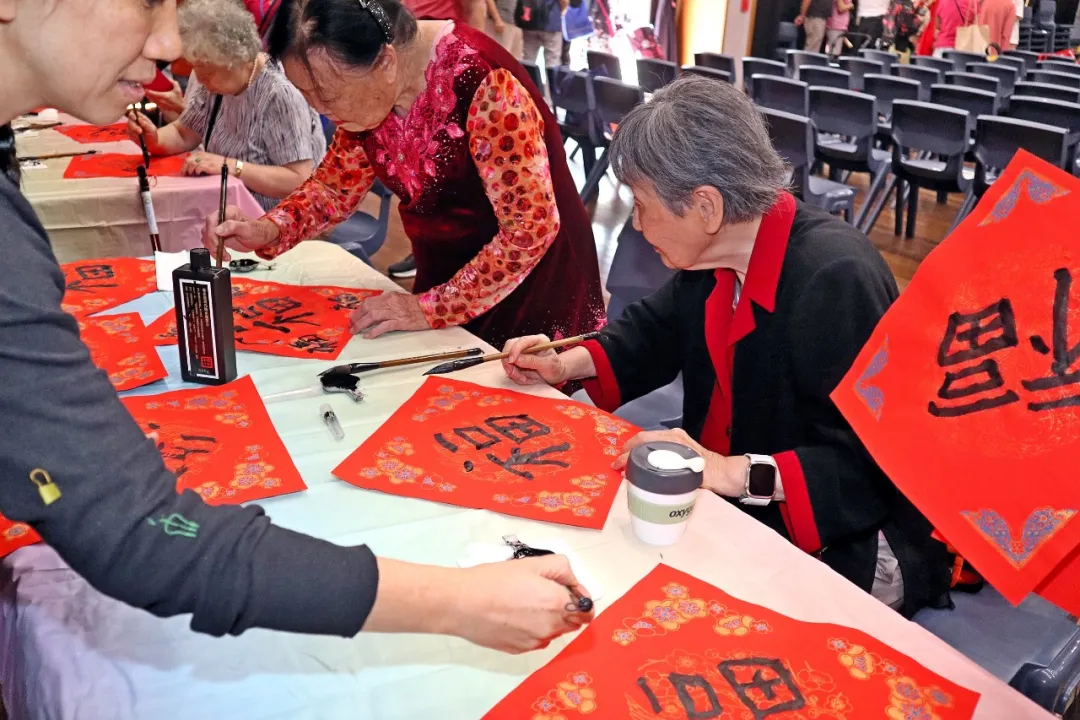
At the calligraphy table, participants were invited to write their own “福” (a Chinese character meaning “good fortune” and “blessing”) and Spring Festival couplets.
“Creating them by hand carries a very different meaning from receiving a printed version,” Robin explained. “The brushwork, the ink, and the creative process all contribute to the festive atmosphere.”
Nearby, female participants gathered around the traditional face decoration booth, where decorative forehead adornments inspired by the Han and Tang dynasties were applied.
“This gives participants a glimpse into classical Chinese beauty traditions while adding another layer of cultural engagement to the celebration.”
Reflecting on the event, Robin observed: “The festival combines education with entertainment, creating opportunities for community members to connect and interact while enjoying the holiday spirit. More importantly, we’re presenting these historically rich traditions in ways that are accessible, engaging, and relevant to contemporary Australian communities. Through experiences like these, more people can appreciate the depth and beauty of Chinese and Asian celebratory cultures.”
The essence of Lunar New Year, however, is found not only in traditional games and cultural activities, but also in the laughter, conversations, and shared experiences that bring communities together.
This year’s festival attracted more than 300 participants. Every smiling face and every round of applause reflected the vitality and cohesion of the local community. It is hoped that CASS will continue to foster connection through its multicultural programs and events, bringing warmth, joy, and a sense of belonging to families across the community for many years to come.