
High-Intensity Support under Australia’s National Disability Insurance Scheme (NDIS) is among the most complex and demanding forms of care. Participants requiring this level of support often have highly complex needs and are at greater risk of serious health complications. Providing this level of support calls for skilled and experienced support workers, equipped with specialised knowledge, practical clinical experience, and advanced skills, and strict adherence to safety protocols in order to deliver high-quality care.
One of our Group Homes has consistently met government requirements for providing NDIS High-Intensity Support over many years. During a recent visit, I spoke with Nana, who works in our Disability Services unit, to learn more about the expertise and dedication behind specialised care and the difference it can make in people’s lives.
“There are currently five residents in this home who require High-Intensity Support,” Nana explained. “One resident experienced a stroke that left her with severe muscle stiffness. She relies on a feeding tube for all nutrition and even faces the risk of aspiration when swallowing saliva. To keep her safe and well, our team works closely with doctors, nurses, and allied health professionals to develop a comprehensive care plan. Every support worker receives specialised training and must pass practical competency assessments before they are authorised to provide care.”
During my visit, I observed first-hand the patience and thoughtful approach that staff bring to supporting a female resident.
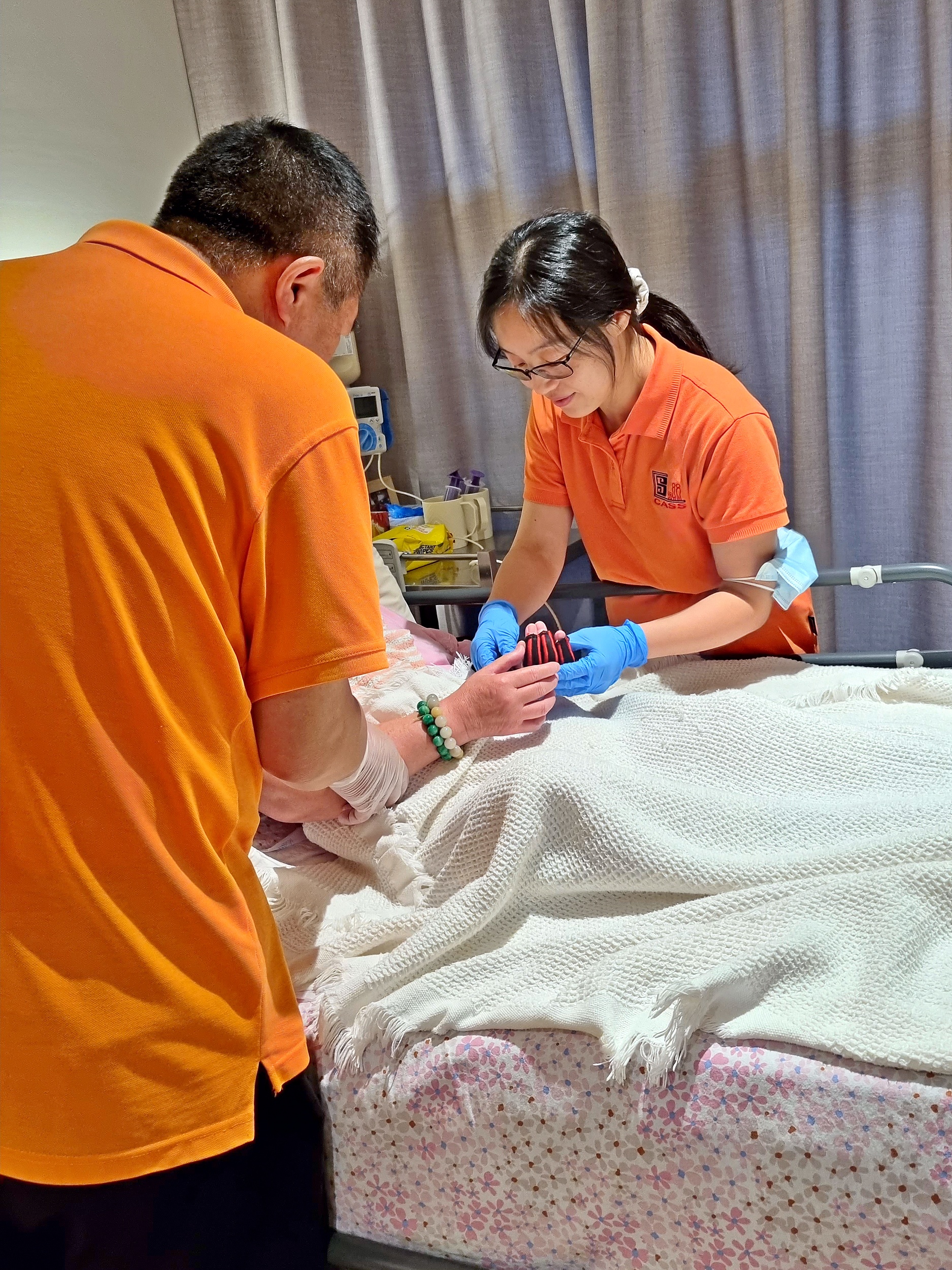
“Each aspect of care follows clearly defined procedures,” Nana said. “For example, we reposition her every two hours, regularly flush the feeding tube. Medications are administered with precision three to five times a day, and blood glucose levels are monitored routinely. We also use professional monitoring system to track and keep detailed records of her sleep, bowel movements, sleep patterns, and vital signs so that any changes can be picked up quickly.”
Under the guidance of a speech pathologist, they prepared one of the residents’ favourite foods, the steaming potatoes. The potatoes were blended into a smooth puree and gently applied to her lips and mouth using the tip of a chopstick, allowing her to experience a familiar and comforting taste. As she was unable to swallow safely, they then carefully removed the puree with a cotton swab after she had tasted it.
“The entire process is carried out in accordance with professional clinical guidance,” Nana added. “While safety always comes first, we also strive to support each person’s preferences and quality of life. Through ongoing health monitoring, rehabilitation support, and daily companionship, her condition has gradually improved. Her muscle stiffness has eased significantly, and she has gained greater mobility.”
Speaking about another resident, Nana recalled, “When she first moved into the Group Home, the changes to her physical abilities had a major impact on her confidence. Having lost much of her independence, she became withdrawn. She rarely spoke, was underweight, and her voice was so faint that it could barely be heard.”
Overtime, however, things began to change. “Our team believes in treating residents like family,” Nana continued. “We focus not only on their physical wellbeing but also on providing emotional support and encouragement. Slowly, she has regained her confidence and overcome many of the challenges she faced. Today, her weight has returned to a healthy level, her voice is strong and clear, and she enjoys singing and chatting with staff. The smile that had long been absent has returned to her face.”
What I witnessed at the Group Home was more than a system of professional and highly structured care, but also genuine dedication from the staff providing it. Behind every High-Intensity Support care plan and daily routine is a team working to help residents live with greater dignity, independent, and quality of life.