
When In Australia, Do As The Aussies Do
Learn the social etiquete and be a read Australian
It has been suggested that a community organisation like CASS could arrange a course for new migrants to teach them the customs and manners of Australia. This is a good idea, since Australian community workers and volunteers sometimes find the behaviour of the Chinese community difficult to understand. Timely advice could prevent misunderstandings based on ignorance or cultural differences. Other unacceptable behaviours may be the result of bad habits accumulated over time which could be changed through better understanding ofsocial etiquette in the new country.
When CASS originally collaborated with Australian community organisations, they would often offer tea and refreshments to all participants. The expectation was that everyone would share what was on offer. Now Chinese organisations often decline to provide English tea during activities, saying that Chinese prefer Chinese tea. The truth is more embarrassing. When milk was provided for adding to English tea, some Chinese would instead pour themselves whole cups, leaving others with none. To avoid this situation, CASS has stopped providing milk.
On occasions when refreshments were served, those at the front of the queue would pile their plates. By the time the end of the queue was reached, there was no food left. In Australia, light refreshments are considered a form of morning or afternoon tea, not providing for a full meal. However, some participants were not only eating as a meal- they were resorting to “takeaway” as well.
Many years ago, we witnessed the unfortunate scene of a group of seniors fighting over food. After a community safety talk organised by a Council, refreshments were provided. Instead of queueing to get food, participants pushed and shoved, overturning plates and spilling food everywhere. Organisers were helpless. The Council had to call in their cleaning staff with vacuum cleaners and other equipment to tidy up the venue. After that incident, food is now distributed to individuals by volunteers whenever an activity group organises parties or functions.
Another problem faced by community organisations is getting audiences to pay attention during official ceremonies. No matter who the VIPs are, people continue talking when the guests are speaking. Many people who have attended activities organised by Chinese organisations describe this is a continuing problem which does not fit well with normal practice here. During official ceremonies, it is important to show respect for honoured guests by listening to what they have to say.
As migrants, we know that in most Chinese cities, homes are small, making it difficult to invite family and friends in groups. People generally gather at restaurants to network, and have a habit of talking loudly and freely in public places as the surroundings are noisy. People in Australia, however, value privacy, and believe that it is important to minimise disturbance to others while at public venues.
A CASS worker remembers how, at a consultation aimed at improving community life, an Australian attendant expressed her displeasure in seeing people spitting in public places, and some elderly people letting their small grandchildren urinate in the street. Both are unhygienic practices. The worker felt so embarrassed she wished there was somewhere to hide.
Originally published in May 2011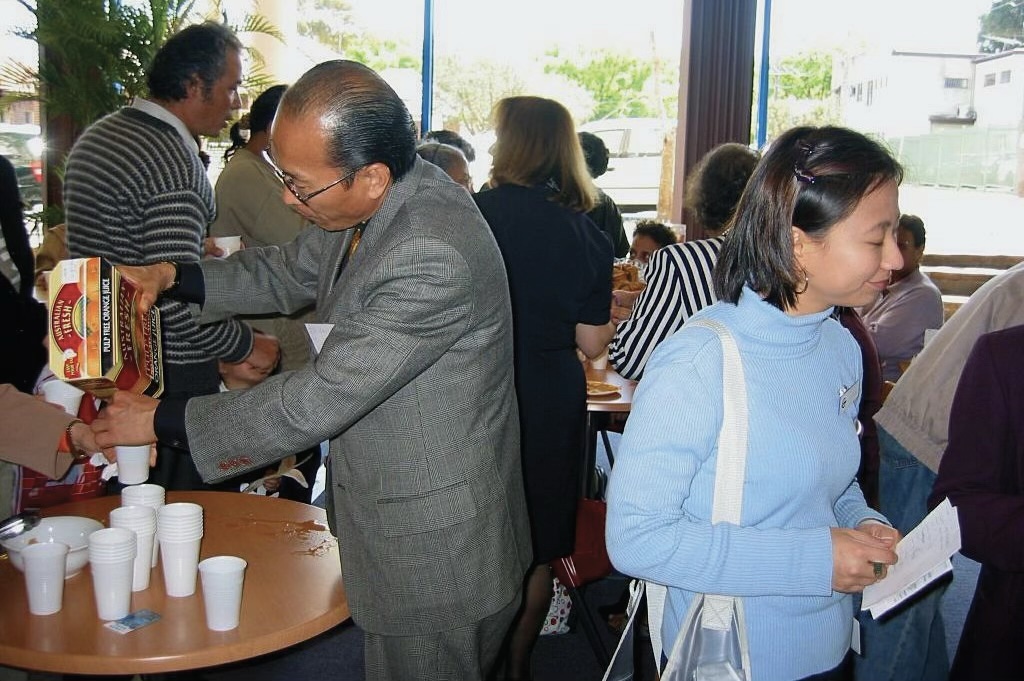
It is common practice for Aussies to have refreshments at the end of a function to facilitate networking among participants